
- All
- Product Name
- Product Keyword
- Product Model
- Product Summary
- Product Description
- Multi Field Search
Views: 0 Author: Site Editor Publish Time: 2025-10-01 Origin: Site


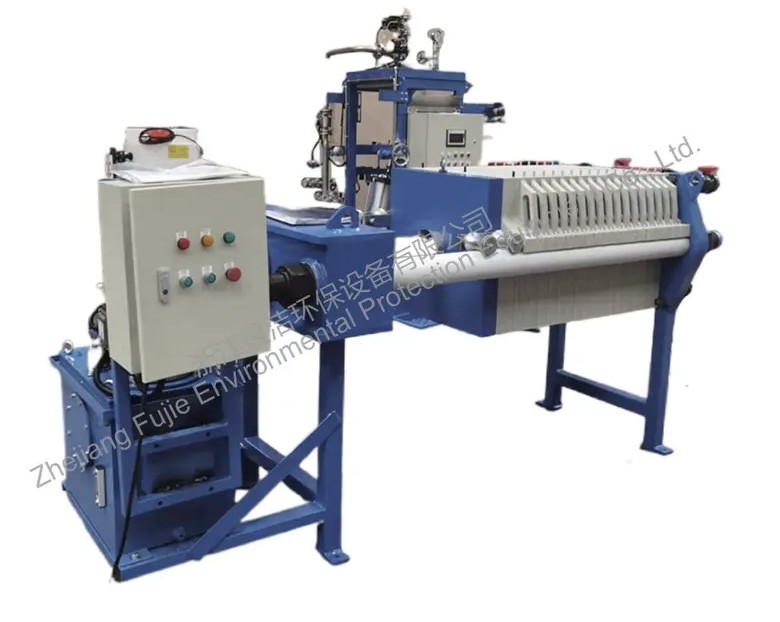
Ever wondered why some filter presses produce drier cakes than others? The answer lies in their design. Filter presses are essential for solid-liquid separation across industries, from wastewater treatment to chemical processing. Two common types—Plate and Frame and Recessed Chamber—work on similar principles but differ in structure, performance, and maintenance needs. In this post, you’ll learn how each type functions, their key advantages, and how to choose the best one for your application.
A plate and frame filter press is one of the earliest and simplest designs used for solid-liquid separation. It consists of alternating filter plates and frames arranged in a series, held tightly together by a clamping system. Each frame acts as a chamber that holds the slurry, while the plates on both sides support the filter cloth that captures solids. This alternating layout allows efficient filtration even with fine particles or low solid concentrations.
In a typical setup, plates and frames are stacked alternately inside a steel skeleton frame. The plates are flat and smooth, providing support for the filter cloth. The frames between them form hollow spaces where slurry collects and filter cakes build up. Feed slurry enters through corner holes, while filtrate drains out through opposite corner ports. Most units rely on manual clamping, though larger presses may use hydraulic systems for tighter sealing.
Key Structural Features
| Component | Function |
|---|---|
| Plate | Supports filter cloth and provides drainage surface. |
| Frame | Holds slurry and defines the cake thickness. |
| Filter Cloth | Retains solids and allows filtrate flow. |
| Feed Ports | Located in corners for slurry distribution. |
| Discharge Ports | Carry filtered liquid out of the system. |
Here’s how the process unfolds step by step:
Slurry Feed: The slurry is pumped through one of the corner holes into each frame cavity.
Filtration: Solids begin collecting on the cloth, forming a thin filter layer.
Cake Formation: As pressure increases, more solids are trapped, creating a compact cake.
Filtrate Discharge: The clear liquid passes through the cloth, exits via unused corner holes, and moves to drainage pipes.
Cake Removal: Once filtration ends, the press is opened, and cakes are scraped out manually—usually into a hopper below.
Tip: Operators often use spatulas or scrapers to remove cakes between cycles, keeping the cloth surface clean for the next run.
The plate and frame press remains popular for certain precision processes because of its flexibility and simplicity.
Here’s what makes it stand out:
Adjustable Cake Thickness: Swap frames of different sizes to control the cake volume.
Versatile Filtration Media: Works with filter cloths, filter paper, or specialty membranes.
Easy Maintenance: Quick cloth replacement and low setup cost.
Fine Filtration Capability: Excellent for low solids concentration or polishing applications such as pharmaceuticals or chemicals.
These presses are ideal when filtration quality matters more than volume or speed.
Despite its reliability, this design has several operational limitations:
Uneven Pressure Risk: Small corner feed ports can clog, causing uneven flow and possible plate cracking.
Leakage Issues: Non-gasketed plates allow fluid to seep or wick under pressure.
Manual Operation: Requires manual cake removal, cleaning, and cloth replacement between cycles.
Lower Efficiency: Slower processing makes it unsuitable for large-scale or automated production lines.
| Limitation | Impact on Operation |
|---|---|
| Clogged Feed Port | Uneven chamber filling and potential damage. |
| Leakage | Product loss and mess during operation. |
| Manual Cake Removal | Higher labor demand and downtime. |
| Limited Scalability | Best suited for small batches or testing. |
Even with these drawbacks, the plate and frame filter press remains a valuable tool for precise, small-batch filtration processes.
A recessed chamber filter press is the modern evolution of the traditional plate and frame system. Instead of using separate plates and frames, it uses recessed plates that fit together to form chambers. When two plates are pressed against each other, they create a cavity — or “recessed chamber” — where solids collect and form filter cakes. This design allows for stronger sealing, higher pressure operation, and easier automation compared to older systems.
In this setup, each filter plate has a shallow recess molded into both sides. When two plates are clamped together, the recesses align to form a single chamber for the slurry. The filter cloths are mounted on each plate, trapping solids while letting liquid pass through. Feed slurry enters through a center inlet port, which distributes it evenly across all chambers. Filtered liquid, or filtrate, flows out through corner discharge ports into a drainage manifold.
Simplified Layout Overview
| Component | Description |
|---|---|
| Recessed Plate | Has depressions on both sides forming chambers when paired. |
| Filter Cloth | Covers each plate to capture solids. |
| Center Feed Port | Allows even distribution of slurry into all chambers. |
| Corner Ports | Drain filtrate to the outlet manifold. |
| Hydraulic Frame | Provides clamping pressure for sealing and operation. |
This integrated structure replaces the need for separate frames, making it more compact and efficient for industrial operations.
The filtration process happens in several steps:
Filling: Slurry is pumped into the filter press through the central feed port.
Cake Formation: Solids build up on both sides of the filter cloth, forming a uniform layer.
Filtration: Clear liquid passes through the cloth and drains via the corner ports.
Dewatering: Pressure increases, removing residual moisture and compacting the cake.
Cake Discharge: Once full, the plates open automatically or manually, and cakes drop into collection bins below.
Each cycle produces dense, low-moisture filter cakes, ideal for industries that require clean filtrate and efficient solid recovery.
Tip: The tapered recess helps cakes release easily without sticking to the plate surfaces.
Modern recessed chamber presses are built for durability and automation. They’re usually made of polypropylene for chemical resistance and light weight. Most units include hydraulic clamping systems to apply uniform pressure across plates. Larger models may feature automatic plate shifting to reduce manual labor.
They come in two configurations:
| Type | Description | Pros | Cons |
|---|---|---|---|
| Gasketed | Rubber gaskets seal around ports and edges. | Leak-free, clean operation. | Slower cloth replacement. |
| Non-Gasketed | Uses latex-edged cloths or sealing strips. | Faster maintenance. | Slightly more leakage possible. |
This flexibility lets users choose between convenience and sealing efficiency based on their application needs.
The recessed chamber press offers several benefits over older designs:
Uniform filling through the center feed prevents uneven pressure buildup.
Handles higher operating pressures, resulting in drier filter cakes.
Reduced clogging risk and lower chance of plate damage.
Better sealing minimizes leakage and product loss.
Tapered recess allows quick cake release without scraping.
Supports automation, making it perfect for large-scale continuous filtration lines.
These advantages make it the preferred option for industries handling high-solid slurries or requiring minimal manual intervention.
Although efficient, this system isn’t without challenges:
Fixed cake thickness — determined by the plate recess — limits flexibility for process variation.
More complex cloth replacement — especially in gasketed models — takes longer to complete.
Higher initial investment due to advanced components and automation systems.
Larger footprint in some installations because of hydraulic units and shifting mechanisms.
| Drawback | Effect |
|---|---|
| Fixed Chamber Depth | Cannot easily adjust cake volume. |
| Cloth Replacement Time | Increases maintenance downtime. |
| Higher Cost | Offset by greater long-term efficiency. |
Despite these limitations, recessed chamber presses remain the industry standard for modern, high-efficiency filtration operations.
When choosing between a Plate and Frame Filter Press and a Recessed Chamber Filter Press, it helps to know what sets them apart. Both perform the same basic job — separating solids from liquids — but they differ in structure, operation, and efficiency. Let’s break down their major distinctions to help you decide which design fits your process best.
The plate and frame press uses alternating plates and frames to form chambers. In contrast, the recessed chamber press relies on plates with built-in cavities. That design eliminates the need for separate frames, making the setup more compact and leak-resistant.
Quick Comparison:
| Feature | Plate and Frame Filter Press | Recessed Chamber Filter Press |
|---|---|---|
| Structure | Alternating plates and frames | Recessed plates only |
| Feed Location | Corner feed | Center feed |
| Cake Thickness | Adjustable by changing frame size | Fixed by chamber depth |
| Pressure Handling | Moderate pressure range | Handles higher pressure easily |
| Sealing | Non-gasketed; may leak slightly | Gasketed; strong and secure seal |
| Maintenance | Simple but frequent cleaning needed | Less frequent, slightly more complex |
| Automation | Mostly manual operation | Supports hydraulic and automated systems |
| Best for | Fine filtration, small batches, or lab-scale tests | Industrial dewatering, high-volume processes |
The feed system is one of the biggest differences. Plate and frame designs feed slurry through corner holes, which can clog over time. Recessed chamber presses use a center feed, allowing smoother flow and more even pressure distribution. As a result, chambers fill uniformly and reduce plate stress. Recessed chamber units also handle higher pressure, which helps remove more water and produce drier cakes. Plate and frame presses, while simpler, are better for lower pressure or gentle filtration needs where precision matters more than speed.
Plate and frame systems are easier to clean but need it more often. Operators can quickly remove cloths or replace filter papers between runs. However, the non-gasketed design means occasional leakage is inevitable. Recessed chamber presses, on the other hand, require less manual work once running. Gasketed plates provide tight seals, and automated plate shifters can unload cakes quickly. Maintenance takes more skill, but it’s less frequent — ideal for continuous or large-scale operations.
Each type shines in its own environment:
Plate and Frame Filter Press: best for fine filtration, research labs, or small chemical processes where flexibility is needed.
Recessed Chamber Filter Press: preferred for industrial wastewater, mining, metallurgy, and food processing, where high throughput and dryness are key.
Tip: If your process values clean filtrate and controlled operation, choose plate and frame. For heavy-duty dewatering or automated production lines, go with a recessed chamber press.
Selecting the right filter press isn’t just about cost — it’s about matching performance to your process. Every slurry behaves differently, and each industry demands specific efficiency, dryness, and ease of use. Here’s how to decide which type fits your needs best.
The first step is understanding what you’re filtering. Different slurries require different filtration designs.
Solid Concentration: If the slurry has low solid content, a plate and frame filter press works better. It allows fine filtration and prevents blockage in narrow feed paths. High-solid feeds, like sludge or mining tailings, suit recessed chamber presses, which handle thick materials under pressure.
Particle Size: Small, fine particles need a press that can use filter paper or dense cloths, like the plate and frame model.
Coarser materials form stable cakes more easily, ideal for recessed chambers.
Slurry Viscosity:Thick, viscous slurries benefit from center-fed recessed chambers that promote even filling and faster flow.
Tip: Always test a small batch first — it helps predict filter cake thickness and dewatering efficiency.
Your production goals define which press performs best. Think about how much you process, how fast, and how dry you need your cakes.
| Requirement | Best Option | Why |
|---|---|---|
| Fine Filtration | Plate and Frame | Greater control over media and cake thickness. |
| Bulk Dewatering | Recessed Chamber | Higher pressure and larger chambers. |
| Short Cycle Time | Recessed Chamber | Automatic operation reduces downtime. |
| Polishing Filtration | Plate and Frame | Handles low solid loads efficiently. |
Also consider throughput — if you need continuous operation, recessed chamber units can handle higher volumes with fewer interruptions. For specialty or batch work, plate and frame models offer the flexibility to adjust filtration area or media type.
Practical factors often decide the final choice more than the process itself.
Automation Level: If you need automated plate shifting or hydraulic clamping, go for recessed chamber presses. For manual operation and smaller setups, plate and frame presses are simpler and cheaper.
Maintenance and Skill: Plate and frame units are easy to service but need more frequent cleaning. Recessed chambers last longer between maintenance cycles but require skilled operators for gasket or cloth replacement.
Energy Use and Space: Recessed presses are more compact for their capacity but consume more energy for hydraulic operation. Plate and frame presses occupy more space but use less power overall.
| Factor | Plate & Frame | Recessed Chamber |
|---|---|---|
| Automation | Manual | Hydraulic / automatic |
| Maintenance Frequency | High | Low |
| Operator Skill | Basic | Intermediate |
| Energy Use | Low | Moderate to high |
| Footprint | Larger | More compact |
Different industries rely on different designs — here’s where each filter press shines:
Plate & Frame Filter Press
Laboratories handling small-batch tests or pilot runs.
Pharmaceutical or fine chemical plants needing ultra-clear filtrate.
Polishing applications removing trace solids from liquids.
Recessed Chamber Filter Press
Wastewater treatment plants separating sludge efficiently.
Mining and metallurgy for dewatering tailings and concentrates.
Food processing for filtering thick slurries like fruit pulp or starch.
Chemical production where high pressure and dryness improve product recovery.
Hint: If your process demands speed, consistency, and automation — go with a recessed chamber press. If it values flexibility, clarity, and precision — stick to a plate and frame design.
The Plate and Frame Filter Press is flexible, simple, and ideal for fine filtration. The Recessed Chamber Filter Press handles higher pressure, seals better, and suits industrial-scale dewatering. Choosing the right system depends on your slurry type, process goals, and production scale. Partner with a reliable manufacturer to ensure a solution perfectly tailored to your filtration needs.
The Plate and Frame Filter Press uses separate plates and frames to form chambers, while the Recessed Chamber Filter Press uses plates with built-in cavities. The recessed design handles higher pressure, offers better sealing, and supports automation for large-scale filtration.
The Recessed Chamber Filter Press generally produces drier cakes because it can operate under higher pressure and ensures uniform filling. Its sealed, center-fed design improves dewatering efficiency and reduces moisture content in the final cake.
Choose a Plate and Frame Filter Press when your process involves low solid concentration, fine particles, or small-batch filtration. It’s ideal for laboratories, pharmaceuticals, and chemical polishing applications where precision and clarity are more important than speed.
The Recessed Chamber Filter Press is best for industrial-scale applications such as wastewater treatment, mining, and food processing. It supports hydraulic or automatic operation, requires less manual handling, and delivers consistent high-volume filtration.
Evaluate your slurry characteristics (solid content, viscosity, particle size) and process goals (throughput, dryness, automation). Then, consult a reliable manufacturer like Zhejiang Fujie to design a filter press system tailored to your materials, space, and performance requirements.
At Zhejiang Fujie, we blend innovation, quality, and service into every filter press we deliver. Our high-end environmental protection equipment covers full R&D, manufacturing, assembly and turnkey delivery.
We lead the industry with ultra-large extrusion and pressing lines, and five-axis machining for precision and uniform performance.
Our systems run cycles of feeding, discharging, and washing in just 30 minutes — highly efficient and seamless.
We offer full customization: specifications, functions, materials all tailored for your industry needs.
Backed by national high-tech credentials and patent strength, Fujie products provide long-term reliability.
Our after-sales system includes technical training, prompt maintenance, and global support — we always stand by your side.
Ready to upgrade your filtration process? Contact us today and let Fujie deliver the filtration solution your operation truly deserves.


