
- All
- Product Name
- Product Keyword
- Product Model
- Product Summary
- Product Description
- Multi Field Search
Views: 0 Author: Site Editor Publish Time: 2025-10-03 Origin: Site


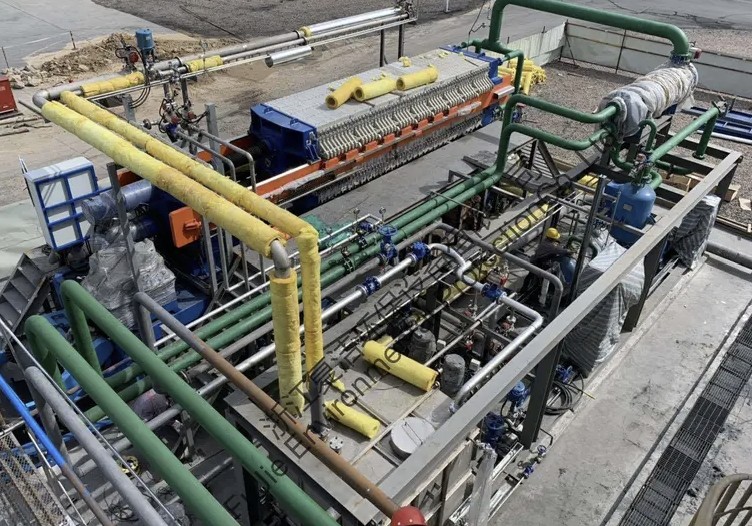
Ever wondered how industries separate solids from liquids so efficiently? The secret often lies in a plate filter press. This classic piece of equipment plays a vital role in solid-liquid separation, delivering clean filtrate and compact filter cakes. From wastewater treatment to food, chemical, and mining applications, it remains a trusted workhorse. In this post, you’ll learn what a plate filter press is, how it works, and why it’s still essential in modern industry.
A plate filter press is one of the oldest yet most reliable machines used for solid-liquid separation. It works by applying pressure to a slurry mixture, forcing the liquid to pass through filter cloths while solids remain behind as cakes. Despite its simple design, it continues to play a vital role across industries — from wastewater treatment and mining to chemicals and food processing. Its enduring popularity comes frm its high efficiency, customizable setup, and ability to deliver extremely clear filtrate.
At its core, a plate filter press is a mechanical filtration device that separates solids from liquids by squeezing slurry between stacked plates. Each filter plate and frame together create chambers that hold the slurry during filtration. The filter cloths capture solid particles as liquid moves through them, while the hydraulic frame applies uniform pressure to keep everything tightly sealed. This design is both straightforward and effective — a combination that has made it a workhorse in filtration for over a century.
You can think of it as a pressure-powered filter sandwich — slurry goes in, water comes out, and dry solids stay behind. It’s not fast like modern continuous filters, but its reliability and precision make it a favorite for batch operations.
Fun fact: The plate filter press design dates back to the 1800s, yet modern upgrades like automatic plate shifting and membrane squeezing keep it relevant today.
A plate filter press might look simple, but every part plays a critical role in its performance.
Here’s what makes up the system and how each component works:
| Component | Function |
|---|---|
| Filter Plates | Provide structure and support for the filter cloth. Their grooves and drainage ports help collect filtrate efficiently. |
| Frames | Form the chambers that hold the slurry and define the cake thickness. |
| Filter Cloths | Act as the main filtering medium, trapping solids while allowing liquid to pass through. |
| Hydraulic System | Clamps the plates together tightly, maintaining constant pressure during filtration and dewatering. |
| Feed Pump | Pushes slurry into the chambers under controlled pressure, ensuring even filling and optimal cake formation. |
Together, these components create a powerful yet flexible system capable of producing clear filtrate, uniform filter cakes, and repeatable results cycle after cycle.
A plate filter press separates solids from liquids through a series of controlled, high-pressure filtration steps. It might look like a stack of plates, but once the slurry enters, every plate, cloth, and seal works together to produce clear filtrate and compact cakes. The process runs in cycles — feeding, filtering, dewatering, and cake discharge — ensuring maximum efficiency and consistent results each time.
The operation of a plate filter press is simple but highly efficient.
Here’s how it works, step by step:
Slurry Feeding
The slurry, a mixture of liquid and suspended solids, is pumped into the chambers between plates and frames. The feed pressure gradually rises as chambers fill completely. Each chamber acts like a mini filter, trapping solids on the filter cloth.
Filtration
As the feed continues, the liquid phase (filtrate) passes through the filter cloth and drains out through small outlet ports. The cloth retains the solid particles, forming an even layer across the surface. This layer becomes part of the filtering medium, improving clarity over time.
Cake Formation
Once solids accumulate, pressure inside the chamber increases. The liquid is forced out, and the remaining solids compress into a dense, uniform filter cake. Depending on the application, operators can adjust feed pressure and duration for optimal dryness.
Cake Removal
After the filtration cycle ends, the press opens. Plates separate automatically or manually, allowing cakes to fall into collection bins below. Some systems use vibration or plate shifters to help cakes release cleanly.
Tip: Proper pressure balance prevents uneven cake buildup and reduces strain on filter plates.
Every filtration run follows a predictable cycle. Understanding each stage helps improve efficiency and product consistency.
| Cycle Stage | Description | Key Control Factors |
|---|---|---|
| Filling | Slurry is pumped into chambers until evenly distributed. | Flow rate, feed pressure |
| Filtration | Liquid passes through cloths; solids begin forming cakes. | Cloth permeability, chamber volume |
| Dewatering | Pressure increases, squeezing residual moisture from the cakes. | Operating pressure, timing |
| Discharge | Plates open; dried cakes drop out automatically or by hand. | Plate spacing, vibration assist |
This entire process is cyclical — the press resets after each discharge to begin the next batch. Modern systems automate much of this, including pressure control, plate movement, and cloth cleaning, making operation faster and cleaner.
Suggested Diagram: A visual showing slurry flow (inlet), filtrate discharge (outlet), and cake buildup within the filter chambers can help readers see how each stage connects.
Even though the cycle is batch-based, its precision and repeatability make the plate filter press one of the most dependable filtration technologies available today.
Not all plate filter presses are built the same. While they share the same basic principle — separating solids from liquids using pressure — their design and performance can differ significantly. The three most common types are Plate and Frame, Recessed Chamber, and Membrane (Diaphragm) filter presses. Each type serves a unique purpose, depending on the required filtration precision, pressure, and dryness of the filter cake.
The Plate and Frame Filter Press is the original and simplest design, often considered the foundation of all modern filter presses. It uses alternating plates and frames arranged in a series to create multiple filtration chambers. The slurry enters through corner holes, filling each frame where solids accumulate on the filter cloth. As filtrate exits through alternate ports, a thin, uniform cake forms between each plate pair.
Key Highlights:
Ideal for fine filtration and low solid concentration slurries.
Allows easy adjustment of cake thickness by changing the frame size.
Commonly used in laboratories, pharmaceutical processing, and chemical purification where precision matters more than throughput.
Maintenance is straightforward — cleaning and cloth replacement are quick.
| Feature | Description |
|---|---|
| Structure | Alternating plates and frames |
| Pressure Range | Moderate (0.4–0.8 MPa typical) |
| Filtration Quality | High; suited for polishing filtration |
| Operation | Manual or semi-automatic |
| Typical Industries | Chemicals, dyes, pharmaceuticals, fine filtration |
Tip: Because of its open structure and versatility, this design is still popular in R&D labs and small production runs.
The Recessed Chamber Filter Press modernizes the traditional design by eliminating separate frames. Instead, it uses recessed plates that fit together to form chambers. When two plates close, the recesses create a cavity where slurry collects and cakes form. This design provides better sealing, higher operating pressure, and simpler cleaning.
Why it’s preferred for industrial use:
Handles thicker slurries and higher solids efficiently.
Operates at higher pressure (often up to 1.6 MPa) for drier cakes.
Center feed design ensures uniform filling and reduces clogging.
Compatible with automation, such as hydraulic closing and plate shifting.
| Feature | Plate and Frame | Recessed Chamber |
|---|---|---|
| Feed Type | Corner feed | Center feed |
| Cake Thickness | Adjustable | Fixed chamber depth |
| Sealing | Moderate | Excellent (often gasketed) |
| Maintenance | Simple, frequent | Less frequent, more complex |
| Applications | Lab-scale, fine filtration | Wastewater, mining, food industry |
Used extensively in: wastewater treatment plants, mining operations, and industrial sludge dewatering systems.
The Membrane Filter Press, sometimes called a Diaphragm Filter Press, takes filtration one step further. It combines the advantages of recessed chamber design with flexible membranes installed behind each filter cloth. After the initial filtration stage, these membranes inflate — usually using compressed air or water — to squeeze the filter cakes, removing additional moisture.
Key Benefits:
Produces extra-dry cakes, reducing disposal and transport costs.
Shorter cycle time due to rapid dewatering.
Energy-efficient compared to extended compression in conventional presses.
Suitable for materials requiring low moisture, such as chemical slurries, metal hydroxides, or food-grade powders.
| Parameter | Membrane Filter Press | Advantage |
|---|---|---|
| Working Pressure | Up to 1.6–2.0 MPa | Faster dewatering |
| Cake Moisture | 20–35% (depending on slurry) | Drier cakes |
| Cycle Time | 20–60 minutes | Reduced downtime |
| Typical Use | Industrial dewatering, food, chemical processing | High dryness, high recovery |
Note: Though more expensive initially, membrane presses often save costs over time by reducing drying energy and waste volume.
In summary, each plate filter press type offers a distinct balance of efficiency, precision, and automation.
Choose a Plate and Frame Press for fine or low-volume filtration.
Opt for a Recessed Chamber Press for heavy-duty, high-pressure operations.
Invest in a Membrane Press when maximum dryness and short cycles are your top priorities.
A plate filter press may look simple, but its performance depends heavily on design details. Every parameter — from plate size to hydraulic pressure — affects how efficiently it separates solids and liquids. Understanding these design factors helps engineers, operators, and buyers choose the right configuration for their process.
The performance of a plate filter press starts with the right design specifications. Each setting determines filtration capacity, cake dryness, and maintenance frequency.
| Parameter | Description | Typical Range / Material |
|---|---|---|
| Filtration Area | The total surface area available for filtration; larger areas mean higher throughput. | 1–1000 m², depending on model size |
| Chamber Depth | Determines cake thickness; deeper chambers produce thicker cakes. | 20–50 mm per chamber |
| Operating Pressure | Higher pressure improves dewatering efficiency but requires stronger materials. | 0.6–1.6 MPa (standard); up to 2.0 MPa for membrane presses |
| Feed Configuration | Center-fed designs distribute slurry evenly, reducing clogging and uneven cake buildup. | Center or corner feed |
| Plate Materials | Select based on chemical compatibility and temperature resistance. | Cast iron, polypropylene, stainless steel, or carbon steel |
A cast iron press offers durability for abrasive slurries, while polypropylene plates resist corrosion and reduce weight.
For high-purity or food applications, stainless steel ensures sanitary operation.
Tip: Always match plate material and cloth type to your slurry’s pH, temperature, and abrasiveness. It extends press life and ensures cleaner filtrate.
Modern plate filter presses can be configured for different levels of automation, depending on production scale and labor availability.
Manual Systems
Best for small operations or laboratories.
Operators manually open plates, remove cakes, and clean cloths.
Low cost, but slower and labor-intensive.
Semi-Automatic Systems
Include hydraulic clamping and plate shifters for faster operation.
Reduce manual work while maintaining flexibility for smaller batches.
Fully Automated Systems
Handle everything from feeding and filtration to cake discharge and cloth washing.
Include features like automatic plate shifting, cloth cleaning sprayers, and cycle timers.
Ideal for continuous, high-volume industrial operations where downtime is costly.
| Automation Level | Labor Demand | Speed | Common Applications |
|---|---|---|---|
| Manual | High | Slow | Lab, pilot scale |
| Semi-Automatic | Medium | Moderate | Small to mid-sized plants |
| Fully Automatic | Low | Fast | Large industrial facilities |
Automation not only boosts productivity but also ensures consistent cake quality across multiple cycles.
Safety and reliability are at the heart of modern filter press design. Since the system operates under high pressure, safeguards prevent leaks, overpressure, and mechanical failure.
Key Safety Features:
Pressure Sensors: Monitor filtration pressure and automatically shut off the feed pump if limits are exceeded.
Hydraulic Controls: Maintain uniform clamping force and prevent uneven sealing between plates.
Leak Detection Systems: Detect leaks early to avoid product loss and contamination.
Overpressure Protection: Relief valves and sensors prevent plate cracking or gasket blowout.
Enclosed Operation: Keeps the filtration area sealed, minimizing odor, splash, and operator exposure.
| Safety Feature | Function |
|---|---|
| Pressure Sensor | Tracks and regulates operating pressure. |
| Hydraulic Lock | Keeps plates evenly sealed during cycles. |
| Leak Detection | Identifies faulty seals or cloth damage. |
| Auto Shutoff System | Stops pump during abnormal conditions. |
| Protective Guarding | Ensures operator safety during press movement. |
Remember: A properly maintained safety system not only protects equipment but also prevents costly downtime and accidents.
In essence, the design of a plate filter press balances filtration area, automation, and safety systems to meet diverse industrial demands. Whether it’s a small batch lab setup or a high-pressure automated system, these design choices determine the machine’s efficiency, durability, and ease of operation.
The plate filter press remains one of the most reliable and efficient solid–liquid separation systems across industries. Its combination of mechanical simplicity, energy efficiency, and customization flexibility makes it a top choice for wastewater treatment, mining, chemical production, and food processing applications.
A plate filter press can achieve exceptionally high levels of dewatering, reducing waste volume and liquid content.
It produces clear filtrate and dense filter cakes, which help lower disposal costs and minimize environmental impact.
The precise pressure control also ensures consistent performance over repeated cycles.
Example: In wastewater treatment, plate presses can cut sludge volume by more than half, reducing transport and drying costs.
This press works effectively with a range of filtration media, including filter cloths, papers, or membranes. Operators can easily switch or layer these media to match filtration needs — from fine polishing to bulk dewatering. This versatility allows it to adapt to different slurry types and contamination levels
| Medium Type | Best For | Typical Use Case |
|---|---|---|
| Filter Cloths | General filtration | Mining, wastewater |
| Filter Paper | Fine particle retention | Chemical polishing |
| Membrane Liners | Moisture reduction | Food and pharmaceutical |
Every plate filter press can be tailored to fit process goals. Users can adjust frame depth, operating pressure, and plate material to control cake thickness and filtration speed. The modular design supports expansion or automation upgrades without replacing the entire system.
| Adjustable Element | Effect on Operation |
|---|---|
| Chamber Depth | Defines cake thickness |
| Feed Pressure | Controls dewatering rate |
| Plate Material | Impacts corrosion resistance and durability |
Unlike continuous centrifuges or belt filters, the plate filter press relies mainly on mechanical pressure and gravity. This simple mechanism consumes far less energy, lowering long-term operating costs.
Once pressurized, it maintains performance with minimal energy draw.
Tip: Combining a low-power feed pump with a hydraulic frame maximizes efficiency in high-solid operations.
Engineers design plate presses to handle abrasive and high-solid slurries without excessive wear. The rugged frame and corrosion-resistant materials extend service life and minimize maintenance downtime. Even under harsh conditions, they maintain stable operation for years.
| Feature | Benefit |
|---|---|
| Heavy-duty frame | Long lifespan |
| Polypropylene plates | Corrosion resistance |
| Hydraulic controls | Consistent sealing and safety |
In short, plate filter presses combine efficiency, adaptability, and durability, making them one of the most trusted solutions for modern industrial filtration.
While plate filter presses are known for their high efficiency and clear filtrate output, they also come with a few limitations that may affect productivity and maintenance.Understanding these drawbacks helps operators make informed decisions about upgrading or automating their systems.
Most traditional plate filter presses require manual intervention during the cake discharge process. Operators must open each plate and physically remove the compacted cake, which can be time-consuming and labor-intensive. This slows down batch turnover and increases labor costs, especially in large installations.
| Issue | Impact | Possible Solution |
|---|---|---|
| Manual cake removal | Longer downtime | Automatic plate shifters |
| Cloth cleaning | Frequent operator attention | Cloth washing systems |
Automation upgrades can greatly reduce handling time and improve consistency.
Unlike continuous filtration systems such as belt presses or centrifuges, plate filter presses work in batch cycles. Each cycle — filling, pressing, and unloading — takes time. While the quality of separation is high, throughput per hour is relatively lower. For industries demanding continuous operation, this can limit production scalability.
Membrane or automatic presses can cut cycle duration by improving dewatering speed and discharge efficiency.
Older or non-gasketed plate designs are prone to liquid leakage during filtration. This happens when the cloth edges or plate joints fail to seal under high pressure, especially if solids build up unevenly. Leaked filtrate not only causes mess but can also affect product recovery.
| Leak Source | Cause | Mitigation |
|---|---|---|
| Cloth wicking | No gasket seal | Latex edging or gasketed plates |
| Uneven pressure | Blocked corner feed ports | Regular cleaning and inspection |
Modern gasketed plates or recessed chamber designs minimize leaks and improve safety.
Many plate and frame units operate on manual or semi-automatic systems, requiring frequent human input for valve control, pressure adjustments, and plate shifting.
This increases variability in filtration performance.
Although full automation is possible, it raises initial equipment costs.
Investing in hydraulic or membrane-type filter presses offers automation compatibility and consistent operation.
Upgrading to a hydraulic or membrane filter press can resolve most of these issues.
It enhances pressure control, shortens cycle time, and improves both sealing and automation for industrial-scale performance.
In summary, while plate filter presses remain a cost-effective and dependable choice, recognizing their operational limitations helps users decide when to move toward automated or membrane-based systems for higher throughput and reliability.
The plate filter press is one of the most versatile solid–liquid separation systems in modern industry. Its ability to handle diverse slurries — from fine chemicals to mineral tailings — makes it a staple across environmental, industrial, and food processing sectors. Let’s look at where and how it’s most commonly used.
In both municipal and industrial wastewater treatment, the plate filter press is a workhorse for sludge dewatering. It reduces sludge volume significantly, making transport and disposal far easier. The resulting filtrate is clear enough for reuse or safe discharge, while the solid cakes are easy to handle.
| Use Case | Purpose | Benefit |
|---|---|---|
| Municipal sludge | Dewatering before landfill or incineration | Lower disposal cost |
| Industrial effluent | Removing suspended solids | Cleaner discharge water |
| Chemical wastewater | Recovering reusable filtrate | Sustainability and cost savings |
Tip: Pairing the press with a flocculant dosing system improves cake dryness and filtrate clarity.
Mining operations depend on plate filter presses for handling ore concentrates, tailings, and metal hydroxide sludge. They help recover valuable solids while minimizing water loss in the process. Because of their high-pressure capacity, they’re ideal for heavy-duty dewatering in remote or large-scale operations.
Typical Applications:
Dewatering gold, zinc, copper, or lead concentrates.
Treating mine tailings before dry stacking.
Processing metal finishing residues for recovery and safe disposal.
Example: In metal processing, using a recessed chamber press can reduce tailings moisture by up to 40%, saving drying energy.
Precision filtration is essential in chemical and pharmaceutical manufacturing. Plate filter presses excel in filtering fine particles, catalysts, and pigments from process liquids, ensuring purity and product consistency. They handle corrosive fluids well when built with stainless steel or polypropylene plates.
| Product Type | Filtration Role |
|---|---|
| Fine chemicals | Separate byproducts and impurities |
| Pharmaceutical liquids | Clarify suspensions before drying |
| Catalyst recovery | Reclaim expensive materials |
Note: The adjustable frame depth of a plate press makes it ideal for small-batch, high-purity operations.
In the food and beverage industry, the plate filter press ensures product clarity and hygiene. It’s widely used for juice clarification, edible oil purification, and starch separation. Food-grade stainless steel models maintain sanitary standards and prevent contamination.
Key Food Applications:
Juices and wine: Removes pulp and suspended solids.
Edible oils: Filters impurities before bottling.
Starch and sugar: Separates fine residues during production.
| Process | Result |
|---|---|
| Juice clarification | Bright, transparent liquids |
| Oil filtration | Stable, clear edible oils |
| Starch recovery | Efficient solid separation |
Tip: Automatic cloth washing ensures consistent taste and purity between production batches.
Beyond industry, plate filter presses also play a role in environmental protection and resource recovery. They support recycling, water reuse, and zero-liquid discharge (ZLD) systems by reclaiming clean water from complex waste streams. The compact, enclosed design minimizes odor and leakage — a major plus for eco-focused projects.
| Application | Objective | Outcome |
|---|---|---|
| Water reuse systems | Recycle treated water | Lower consumption |
| Sludge recovery | Recover valuable solids | Reduced waste volume |
| ZLD plants | Eliminate liquid discharge | Environmental compliance |
In short: Plate filter presses bridge sustainability and productivity — turning waste streams into recoverable resources across multiple industries.
Selecting the right plate filter press is essential to achieve efficient, cost-effective, and consistent filtration results. Each application has different requirements — from fine chemical polishing to large-scale sludge dewatering — and the right press depends on pressure, material compatibility, and process goals.
When choosing a plate filter press, it’s not just about capacity or size — it’s about matching design and material to your specific process. Here are the most important considerations before investing in one.
Different slurries require different plate materials for chemical resistance and durability.
Polypropylene is the most common choice — lightweight, corrosion-resistant, and easy to clean.
Cast iron suits abrasive or high-temperature processes.
Stainless steel is ideal for food, pharmaceutical, or corrosive chemical applications.
Tip: Always check your slurry’s pH, temperature, and solid type before selecting the plate material.
The filter cloth determines how efficiently particles are captured and filtrate flows through. Fine-weave cloths trap smaller particles but slow filtration, while coarse weaves allow faster flow but less clarity. Testing a few cloth samples during pilot runs helps balance speed and clarity.
Choose the operation level based on production scale and labor availability.
Manual systems are best for small batches or lab setups — affordable but labor-intensive.
Automatic presses include hydraulic closure, plate shifting, and cloth washing — perfect for continuous or high-volume operations.
| Operation Type | Advantages | Ideal For |
|---|---|---|
| Manual | Low cost, easy maintenance | Small-scale or testing applications |
| Semi-Automatic | Balanced cost and speed | Medium-size plants |
| Automatic | High throughput, minimal labor | Industrial and wastewater systems |
Don’t overlook the practical aspects:
Energy Use: Hydraulic or membrane presses consume more power but deliver drier cakes.
Maintenance: Check how easy it is to replace cloths and seals.
Space: Ensure there’s enough room for plate shifting and cake discharge.
A well-planned layout saves downtime and improves workflow efficiency during cleaning or maintenance cycles.
Here’s a quick comparison to help you select the most suitable plate filter press for your needs:
| Requirement | Recommended Type | Reason |
|---|---|---|
| Fine Filtration | Plate and Frame | Flexible design, precise particle separation |
| High-Pressure Dewatering | Recessed Chamber | Better sealing and pressure endurance |
| High Dryness and Short Cycles | Membrane Filter Press | Membrane squeeze removes extra moisture |
| Corrosive or Food-Grade Media | Stainless Steel Plates | Chemical resistance and sanitary design |
| Continuous Large-Scale Operation | Fully Automatic System | Reduces labor, increases consistency |
Tip:If your process values purity, choose plate and frame. If you need faster, drier cakes, go for membrane. For rugged industrial use, a recessed chamber model offers the best durability.
Ultimately, choosing the right plate filter press is about finding balance — between efficiency, automation, and total operating cost. By aligning your system’s material, design, and control level with your process goals, you’ll ensure reliable performance and long-term value for your investment.
A: It separates solids from liquids through pressure filtration. Slurry enters the chambers, and liquid passes through filter cloths while solids form compact cakes.
A: Filter cakes typically reach 25–50% solids, depending on slurry concentration, pressure level, and press type.
A: Yes. When constructed from stainless steel or polypropylene, it safely filters acidic, alkaline, or chemical slurries.
A: Common in wastewater treatment, mining, chemical processing, pharmaceuticals, and food production.
A: A full cycle usually takes 30–90 minutes, varying by slurry type, pressure, and automation level.
The Plate Filter Press is a dependable, high-efficiency solution for solid-liquid separation. It adapts easily to both lab-scale and industrial needs. Knowing how it works helps users improve productivity and product quality. When configured correctly, it provides clean filtrate, less waste, and lasting value in any filtration process.
At Zhejiang Fujie, we blend innovation, quality, and service into every filter press we deliver. Our high-end environmental protection equipment covers full R&D, manufacturing, assembly and turnkey delivery.
We lead the industry with ultra-large extrusion and pressing lines, and five-axis machining for precision and uniform performance.
Our systems run cycles of feeding, discharging, and washing in just 30 minutes — highly efficient and seamless.
We offer full customization: specifications, functions, materials all tailored for your industry needs.
Backed by national high-tech credentials and patent strength, Fujie products provide long-term reliability.
Our after-sales system includes technical training, prompt maintenance, and global support — we always stand by your side.
Ready to upgrade your filtration process? Contact us today and let Fujie deliver the filtration solution your operation truly deserves.


