
- All
- Product Name
- Product Keyword
- Product Model
- Product Summary
- Product Description
- Multi Field Search
Views: 0 Author: Site Editor Publish Time: 2026-05-20 Origin: Site


In precious metal extraction (gold, silver, platinum), minor inefficiencies in solid-liquid separation translate directly to substantial revenue losses. Extracting these high-value minerals requires absolute precision across all operations. Even a tiny fraction of unrecovered metal severely damages your bottom line. Plant managers face a difficult dual mandate today. You must maximize recovery yields to capitalize on high market prices. Simultaneously, you must maintain strict environmental compliance by eliminating traditional wet tailings ponds.
A properly specified filter press machine is no longer just a dewatering tool; it is a central revenue-recovery and risk-mitigation asset. This guide evaluates how to integrate, specify, and maintain these robust mechanical systems. You will learn actionable strategies for optimal precious metal separation and long-term operational success.
Direct ROI: Implementing high-pressure filter presses rapidly accelerates capital payback by capturing high-grade metal precipitates and recovering 85–95% of process water.
Process Integration: Purpose-built presses are critical in specific metallurgical pathways, including the Merrill-Crowe process and Carbon-in-Pulp/Leach (CIP/CIL) methods.
Risk Mitigation: Transitioning to Dry Stack Tailings (DST) via mechanical dewatering eliminates the liability of tailings dam failures and prevents groundwater contamination.
At current market valuations, the financial threshold for acceptable metal loss is near zero. Effective Mining filtration guarantees physical retention of ultrafine metal particulates. Older technologies lose these valuable fines entirely. Standard settling tanks often fail to capture microscopic gold and silver particles. Pressure filtration forces the slurry through engineered media. This captures precipitates effectively and ensures maximum yield.
Regulatory pressures globally are forcing mines away from wet tailings ponds. Traditional dams carry catastrophic failure risks. Environmental agencies now demand safer, more stable waste management methods. Filter presses convert waste slurry into dense, stackable solids. This approach drastically reduces the operation's environmental footprint. You mitigate long-term geotechnical liabilities effectively. Dry stacking also eliminates the risk of contaminated groundwater seepage.
Mining operations consume vast amounts of water. Operating in arid regions amplifies this challenge. Mechanical filtration solves this by recovering up to 95% of process water. Plants route this clear filtrate for immediate reuse. You reduce your fresh water draw significantly. Furthermore, reusing process water lowers operational costs. You save immense energy by avoiding chemical reheating and retreating cycles.
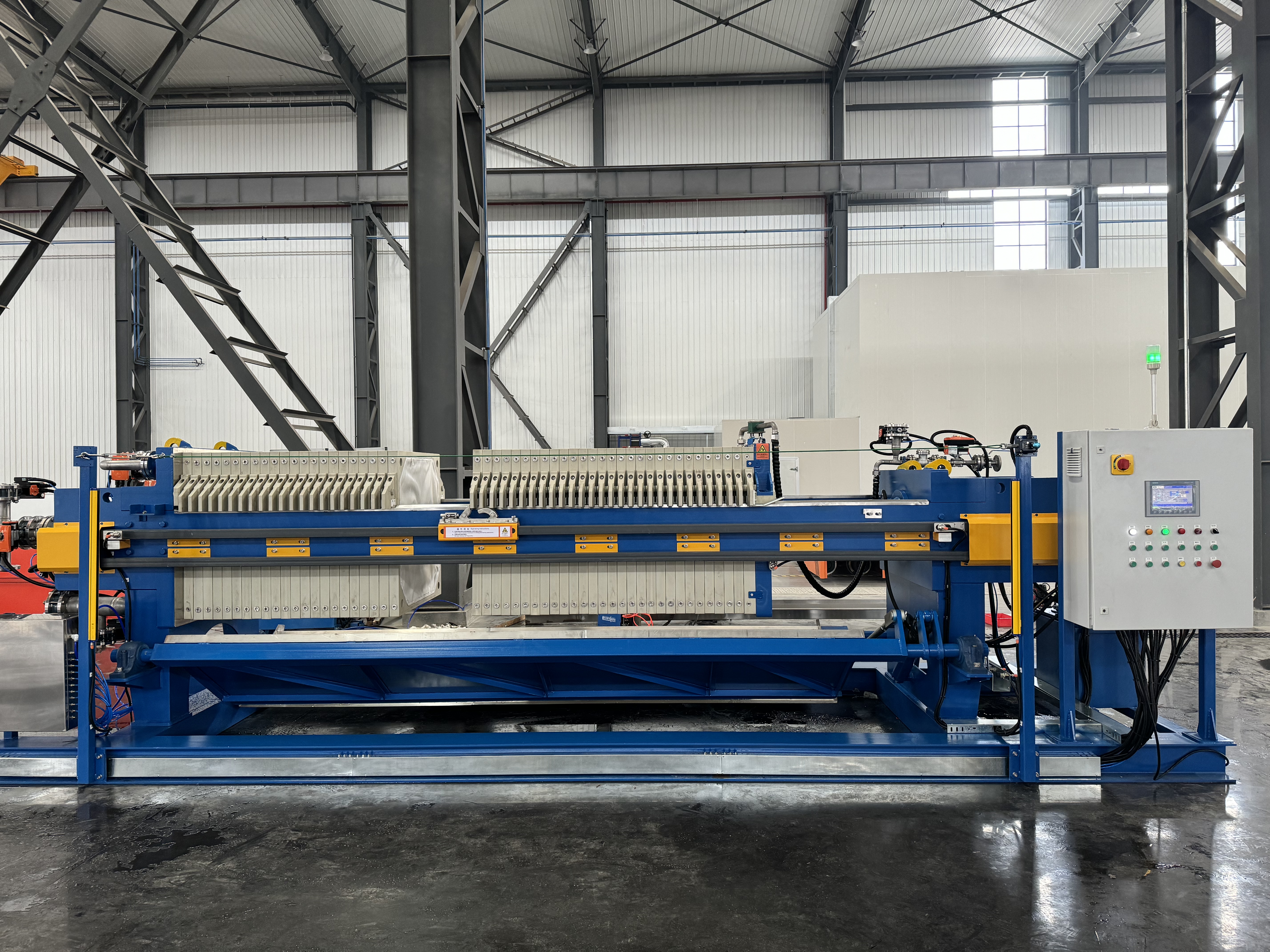
The Merrill-Crowe process recovers gold and silver from cyanide leaching solutions. Operators add zinc powder to the clarified solution. This triggers precipitation. The filter press acts as the absolute physical barrier here. It captures the precipitated zinc-gold and silver particles securely. These presses must run extended cycles. They often operate continuously for 5 to 7 days. They require perfect sealing to prevent pressure drops. Any pressure fluctuation can disturb the delicate filter cake. This ensures maximum metal recovery before the final harvesting phase.
CIP and CIL processes utilize activated carbon to adsorb dissolved gold. Mechanical agitation generates extremely fine carbon dust. This dust carries high-value adsorbed metal. Polish filtration systems filter out these microscopic carbon fines. Losing them means losing pure gold.
Operators often utilize Perlite filter aids to optimize this stage. Perlite serves as a pre-coat or body feed. It prevents ultrafine particles from blinding the filter cloth. It achieves exceptionally high filtrate clarity. Perlite outperforms standard diatomaceous earth (DE) in several critical areas. It features a lower bulk density. It also eliminates crystalline silica exposure risks.
Comparison Chart: Perlite vs. Diatomaceous Earth (DE) in Polish Filtration | ||
Feature/Metric | Perlite Filter Aid | Diatomaceous Earth (DE) |
|---|---|---|
Bulk Density | 30-50% lower (highly efficient) | Higher (requires more material by weight) |
Health & Safety Risk | Zero crystalline silica | Contains crystalline silica (respiratory hazard) |
Cake Porosity | Excellent, prevents rapid pressure build-up | Good, but can compress under high pressure |
Soluble Metals | Extremely low soluble iron | Higher trace metal solubility |
Base and precious metal concentrates require preparation before smelting. The primary goal is reducing moisture content. A drier cake minimizes transport weight. This directly reduces shipping logistics costs. High-pressure presses squeeze out residual moisture effectively. They produce a compact, handleable concentrate. This prepares the material perfectly for downstream refining stages.
Many filtration systems suffer from upstream bottlenecks. Standard clarifier sludge often enters the press at an inefficient 2% Dry Matter (DM). Pumping ultra-thin slurry artificially extends press cycle times. The equipment spends hours filling chambers rather than building solid cakes.
Integrating Dissolved Air Flotation (DAF) systems upstream solves this bottleneck. DAF introduces microscopic air bubbles to float suspended solids. This mechanism elevates the DM to 4-6% before it ever reaches the press. You achieve this without building massive traditional thickeners. This pre-thickening step maximizes the throughput capacity of your primary filtration equipment.
Environmental compliance extends beyond basic tailings management. Operations must handle acidic runoff safely. Presses are critical for comprehensive mining wastewater treatment. Acid Mine Drainage requires chemical neutralization. Operators dose the wastewater with lime or similar alkaline agents. This neutralizes the acid and precipitates dangerous heavy metals. The filtration equipment then captures these hazardous solids. The resulting clear filtrate meets stringent environmental discharge standards safely.
Establishing a robust framework for mine solid liquid separation demands precise equipment evaluation. Procurement teams must look past basic volume metrics. You must align technical specifications with your exact metallurgical environment.
Standard mining operations require equipment operating between 6 and 16 bar. You must evaluate the ideal plate technology for your slurry. Membrane (diaphragm) squeeze plates work best for variable-moisture slurries. They inflate physically to squeeze extra water from the cake. This yields the driest possible result. Standard recessed chamber plates offer a different advantage. They lack moving internal parts. They handle consistent, highly abrasive feeds perfectly. They offer robust longevity in harsh rock-dust environments.
Efficiency relies on smart automation. High-tonnage tailing applications demand rapid turnaround. Automatic plate shifters are mandatory here. They keep cycle times within the standard 30–90 minute window. Manual shifting wastes too much labor and limits plant capacity.
Modern sensors provide crucial diagnostic data. Look for intelligent manifolds during specification. Demand sensor-based filtrate turbidity monitoring. These sensors instantly identify cloth tears. They alert operators before contaminated filtrate cycles back into the system. This proactive monitoring prevents non-planned downtime entirely.
Industrial filtration involves high pressures and hazardous chemicals. Ensure your specification includes essential safety barriers. Safety light curtains immediately halt operation if personnel breach the hazardous zone. Specify automated cloth washing systems. These systems clean the media using high-pressure water jets. They limit operator exposure to harsh leaching chemicals. Finally, include automated drip trays. They catch corrosive filtrate during cake discharge and manage environmental spills.
Analyze Slurry Rheology: Test abrasive properties, particle size distribution, and chemical pH levels before selecting plate materials.
Define Target Moisture: Determine the exact moisture percentage required for downstream transport or smelting.
Calculate Throughput Needs: Base your required cycle time and chamber volume on peak operational loads, not just averages.
Assess Operator Safety: Map out chemical exposure risks to justify automated washing and shifting upgrades.
Filter media degrades naturally over time. Chemical scaling presents a massive risk. Ultrafine particulates blind the filter cloth weaves. This drops throughput and raises internal pressure dangerously. You must specify automated high-pressure wash systems. These systems blast the cloth pores clean between cycles. Additionally, establish rigid, predictive media replacement schedules. Do not wait for a catastrophic tear to change your cloths.
Uneven cake formation threatens machine structural integrity. If one side of a chamber fills faster, it creates severe differential pressure. This imbalance causes plate blowout. It places intense stress on the main hydraulic cylinders. Implement strict feed conditioning protocols to mitigate this. Calibrate your flocculant dosing carefully. Monitor continuous feed-pressure curves. An anomalous pressure spike usually indicates an uneven feed distribution.
High-capacity machines require substantial physical infrastructure. You need significant vertical and horizontal clearance. Gravity-assisted cake discharge demands high mounting structures. Consider the space needed for cake chutes or bomb bay doors beneath the unit. Furthermore, these machines are incredibly heavy when full. Your structural foundations must handle intense dynamic loads. The shifting mechanism creates continuous vibrational stress during operation.
Inspect hydraulic oil levels and cylinder seals at the start of every shift.
Monitor the clarity of the initial filtrate discharge to catch early signs of cloth wear.
Calibrate feed pumps regularly to ensure a steady, non-pulsating slurry flow.
Keep safety light curtain lenses clean from mud and chemical splatter to prevent sensor faults.
Selecting the right equipment for precious metal operations requires looking far beyond basic capacity metrics. You must align the machine's pressure capabilities, automation level, and filter media with your specific metallurgical pathway. Whether managing Merrill-Crowe precipitation, CIP/CIL polish filtration, or dry stack tailings, the right specification protects your yield.
Actionable Next Steps:
Demand pilot-scale product testing on your specific ore slurry from potential vendors.
Establish clear internal baselines for target cake moisture and required cycle times.
Define your filtrate clarity requirements before committing to a full-scale capital expenditure.
Prioritize automation features that physically separate operators from hazardous chemical exposure zones.
A: Depending on ore characteristics, chemical dosing, and whether membrane squeeze technology is used, cycle times generally range from 30 to 90 minutes for tailings. However, specialized Merrill-Crowe precipitation presses run continuously for several days before operators harvest the high-value metal cake.
A: Filter presses operate under high positive pressure, reaching up to 16 bar. This yields significantly lower final cake moisture than vacuum filters. Vacuum systems are fundamentally limited by atmospheric pressure. Presses remain the ideal choice for applications demanding the driest possible concentrate cake.
A: Perlite features a 30-50% lower bulk density than DE. You require much less material by weight to achieve the same filter cake volume. Additionally, perlite contains virtually no crystalline silica. This eliminates major respiratory health liabilities and silicosis risks for your plant operators.
A: Small intermittent operations might manage this, but we do not recommend it for continuous industrial mining. Tailings require high-throughput capacity and heavy-duty abrasion resistance. Acid mine drainage and wastewater treatment demand specific chemical resistance and much finer filtration media. Purpose-built systems yield much better long-term reliability.


