
- All
- Product Name
- Product Keyword
- Product Model
- Product Summary
- Product Description
- Multi Field Search
Views: 0 Author: Site Editor Publish Time: 2026-05-06 Origin: Site


Rising sludge disposal costs and strict environmental compliance rules pose major challenges for facility managers today. Modern industrial plants must recover valuable filtrates while minimizing solid waste volumes. Many facilities still rely on outdated processes. These older systems consume immense power and produce wet, heavy waste. You need a better way to separate solids from liquids efficiently.
The Industrial filter press remains the most effective mechanical dewatering technology available. It relies on physical pressure rather than thermal energy. This mechanical force achieves maximum cake dryness while keeping operational power demands remarkably low. You gain a dry, manageable waste product and clear, reusable fluid.
This guide unpacks the engineering principles behind mechanical separation. We will explore key operational trade-offs and crucial procurement frameworks. You will learn how to evaluate, specify, and implement a high-yield system. Proper planning ensures you deploy equipment tailored perfectly to your specific production goals.
Superior ROI via Dryness: Filter presses achieve 35% to 80%+ cake solid content, drastically reducing downstream transportation and thermal drying costs.
Energy Efficiency: Operating costs are estimated at a fraction (often 1/6th) of continuous rotary or thermal dewatering systems.
Application Specificity: Success depends heavily on balancing operational trade-offs—specifically cycle time versus target cake dryness—and matching filter media to slurry characteristics.
Risk Mitigation: Proper equipment sizing requires bench-scale testing; estimating capacity without analyzing specific fluid dynamics (media vs. cake resistance) leads to equipment failure or processing bottlenecks.
Mechanical dewatering relies on fundamental fluid dynamics. Darcy’s law dictates total filtration resistance during separation. Liquid velocity drops as filter media resistance and accumulated cake resistance increase. The press uses intense mechanical force to counter this resistance. It drives liquid through a porous barrier. The solids remain trapped inside. As these solids build up, they form a cake. This cake acts as a secondary filter. It captures even finer particles over time. You must maintain adequate pressure to keep the liquid flowing efficiently.
A reliable system depends on a robust physical structure. Five distinct components handle the immense stress of daily operations.
Skeletal Framework: Engineers build heavy-duty steel frames. These frames withstand continuous high-pressure clamping forces. They prevent structural deflection during peak pressure spikes.
Hydraulic System: Powerful cylinders provide the massive force needed to seal the plates together. A tiny hydraulic leak can compromise the entire batch.
Manifold & Flow Systems: Precision piping networks handle slurry intake. They direct filtrate discharge cleanly. They also channel water and air for essential wash cycles.
Filter Plates: These form the internal chambers. They hold the slurry and support the media.
Filter Cloth: This is the initial physical barrier. It intercepts solids while letting liquids pass.
Modern units execute a precise operational loop. Standard systems run through several vital steps to achieve high purity.
Hydraulic Sealing: The system closes the plates tightly to form secure internal chambers.
High-Pressure Feeding: Pumps push raw slurry into the chambers at high speeds.
Initial Filtration: Liquid escapes through the cloth. Solids accumulate to form the primary cake layer.
Cake Washing: Clean water flushes through the cake. This step removes residual chemical impurities.
Secondary Membrane Squeezing: Flexible diaphragms inflate inside the chambers. They physically crush the cake to extract more moisture.
Compressed Air Blowing: High-velocity air blasts through the cake matrix. It displaces hidden moisture pockets.
Core Washing & Blowing: The system cleans the feed channels. This prevents sticky material from blocking the next cycle.
Automatic Cake Discharge: The hydraulics release the plates. The dry cake falls into a collection bin below.
[Rich Media Asset Prompt: Insert a 3D animation or GIF breakdown here illustrating the internal slurry flow and cake formation.]
Evaluating Solid liquid separation equipment requires a clear understanding of operational outcomes. Facilities often choose between centrifuges, belt presses, and plate presses. Each technology serves specific production scales and material types. Comparing them side-by-side reveals distinct performance gaps.
Centrifuges spin materials at high speeds to separate distinct phases. They handle continuous flows well. Their small footprint saves floor space. However, they consume immense amounts of electricity. Rapid rotational wear leads to frequent and expensive maintenance. Furthermore, centrifuges rarely produce truly dry solids. They typically yield cake dryness levels between 15% and 35%.
Belt presses squeeze sludge between moving tensioned belts. They offer continuous throughput and demand lower initial capital. Unfortunately, they yield the wettest cake, often hovering between 15% and 30% solids. Belt systems rely heavily on expensive chemical flocculants to bind particles. Open-air belt designs also create significant odor control challenges in enclosed facilities.
Plate and frame systems operate intermittently as batch processes. This requires buffer tank planning. Their footprint can be large for high-volume outputs. Despite these constraints, they deliver unmatched performance. They achieve the highest cake solid concentrations, often exceeding 80%. They boast the lowest operational energy requirements. Facilities scale these machines easily by adding more plates.
Technology | Operation Mode | Cake Dryness Range | Energy Consumption | Primary Disadvantage |
|---|---|---|---|---|
Centrifuge | Continuous | 15% - 35% | Very High | Expensive rotational maintenance |
Belt Press | Continuous | 15% - 30% | Medium | High chemical costs, wet cake |
Filter Press | Batch | 35% - 80%+ | Low | Requires batch flow buffer tanks |
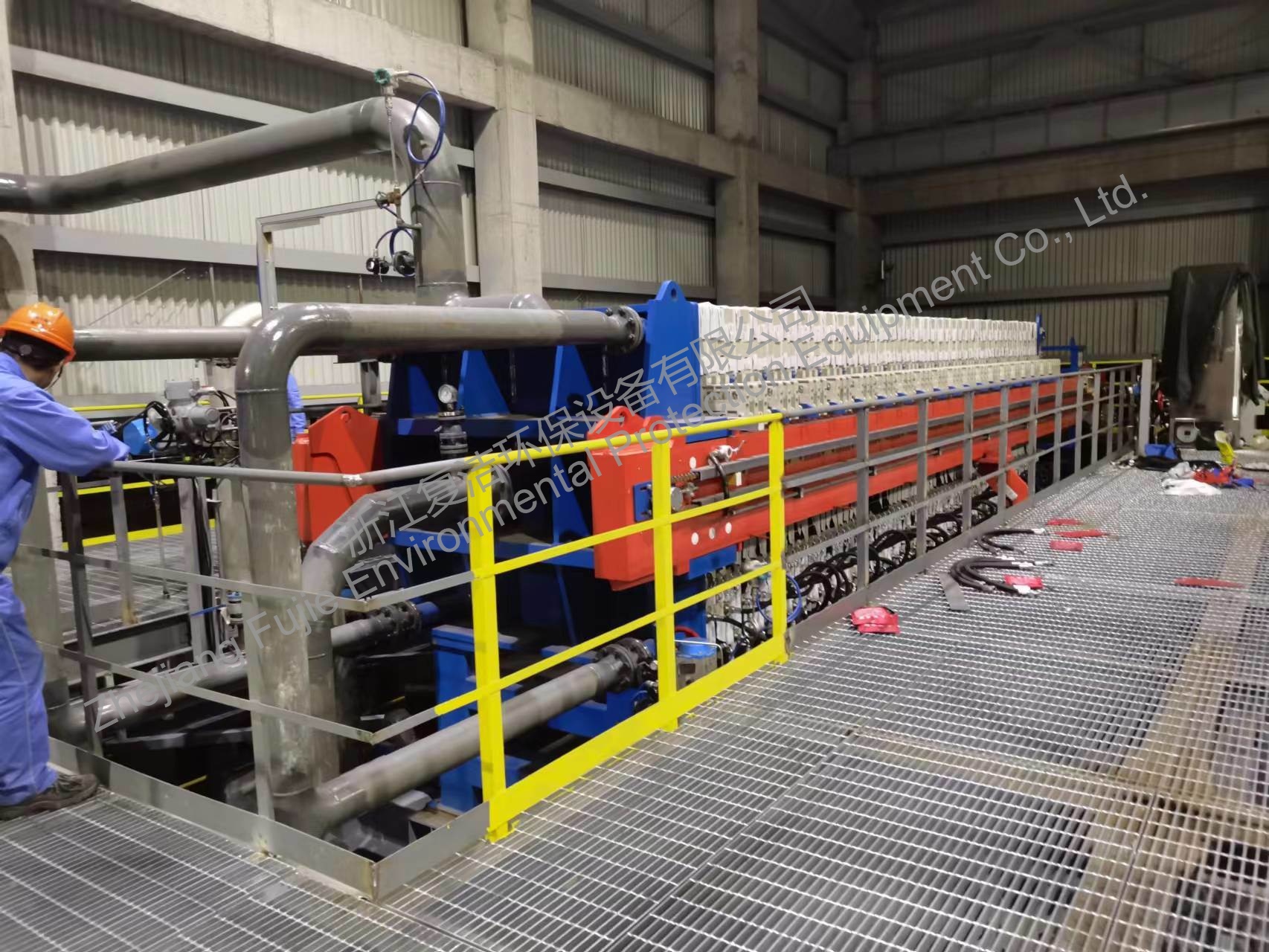
Choosing the correct plate style dictates your final moisture content. You must match the plate design to your specific slurry behavior.
Chamber Plates: This is the standard design for rigid, non-compressible slurries like mining tailings. Chamber plates operate effectively between 6 and 16 Bar of feed pressure. They offer a straightforward dewatering process. The pumps do all the heavy lifting. Once the chamber fills, the cycle ends. They are durable, simple, and cost-effective.
Membrane Plates: Membrane designs feature a flexible internal diaphragm. After the initial pump filtration phase finishes, operators inflate this diaphragm using compressed air or high-pressure water. The inflated membrane physically squeezes the filter cake. These plates handle extreme squeeze pressures up to 30 Bar. They are ideal for highly compressible, gelatinous materials like biological secondary sludge. You drastically reduce final moisture by using the squeeze phase.
The filter cloth is the most critical process variable. Cloths come in woven and non-woven varieties. Their permeability ratings vary wildly. You must verify chemical compatibility before making a selection. Highly acidic or alkaline slurries will destroy incompatible fabrics quickly. Selecting the wrong weave leads to premature "blinding." Blinding occurs when fine particles clog the cloth pores permanently. A properly matched cloth ensures crystal clear filtrate and rapid cake release.
Many modern applications demand specialized modifications. Food and pharmaceutical production require full stainless steel constructions to meet strict sanitary compliance codes. Engineers also design specialized setups for emerging niche markets. Lithium brine extraction and battery black mass recovery require explosion-proof components and extreme chemical resistance. We see custom configurations expanding into microalgae dewatering and specialized metallurgical recycling.
You cannot maximize every metric simultaneously. Adjusting parameters requires compromising between competing business goals. Batch processing forces operators to choose between speed, dryness, and clarity. Understanding these trade-offs prevents daily production frustrations.
Some facilities prioritize volume above all else. They need to process maximum gallons per shift. To achieve this, operators shorten the cycle times. They halt the process before the flow rate drops to zero. This strategy increases daily capacity dramatically. However, you must accept slightly higher moisture content in the discharged cake. This approach suits facilities where downstream drying capacity is abundant.
Reducing disposal weight is often the primary financial goal. Landfills charge by the ton. Water weight costs money. To maximize dryness, operators extend the pressure holding phase. They utilize secondary membrane squeezing extensively. They inject compressed air to blow out residual water. This strategy increases cycle time significantly. You process fewer batches per day, but you minimize landfill transport fees effectively.
Certain industries value the liquid over the solid. Chemical manufacturing and precious metal recovery demand perfectly clear filtrate. Operators utilize tighter filter cloth weaves. They often apply pre-coating techniques using diatomaceous earth. Tighter pores result in slower initial flow rates. The cycle takes longer. However, this strategy yields 90-95%+ liquid purity, allowing immediate reuse of the fluid.
Business Goal | Operational Adjustment | Expected Trade-Off |
|---|---|---|
High Throughput | Shorten cycle time; stop pump early | Wetter final cake |
Maximum Dryness | Extend hold phase; use membrane squeeze | Fewer batches per shift |
Clear Filtrate | Use tight-weave cloth and pre-coating | Slower initial flow rate |
Sourcing your equipment requires careful vendor alignment. Always partner directly with a reputable industrial filtration system factory. You must enforce the bench-test mandate. Never purchase a machine based solely on mathematical volume estimates. Require laboratory-scale pilot testing. Pilot testing proves specific material compressibility. It establishes accurate cycle times. Analyzing fluid dynamics beforehand prevents massive capital waste.
Engineers often miscalculate daily capacity. They focus purely on pump flow rates. They fail to account for dead time. Dead time includes plate opening, cake discharge, and manual cloth washing. A machine might take 20 minutes just to drop the cake and reset. If you ignore these intervals during throughput calculations, you will install severely undersized equipment. Undersized machines create immediate production bottlenecks.
Heavy machinery presents serious workplace hazards. Supervisors must address common maintenance blind spots proactively.
Depressurization Protocols: Operators must gradually step down pressure before opening plates. Failing to depressurize causes catastrophic slurry blowouts. High-pressure spray endangers workers and damages surrounding infrastructure.
EHS Compliance: Workers sometimes bypass Lockout/Tagout (LOTO) protocols during quick cloth adjustments. This violates strict EHS guidelines. A sudden hydraulic activation during maintenance causes severe crush injuries.
Hydraulic Monitoring: Ignoring minor hydraulic fluid leakages leads to systemic failure. Low fluid levels reduce clamping force, causing chambers to leak slurry under peak pressure.
Transitioning to an industrial filter press requires a fundamental mindset shift. You must stop viewing filtration as a generic step. You need to treat it as a precision mechanical process. The upfront capital expenditure might seem substantial initially. However, this cost is rapidly offset. You eliminate expensive thermal drying needs entirely. You also drastically reduce your heavy disposal weight.
To move forward successfully, take these action steps:
Begin your project with a comprehensive laboratory slurry analysis.
Partner with an established manufacturer to conduct onsite pilot testing.
Establish realistic baseline cycle times inclusive of mechanical dead time.
Map the exact operational trade-offs to your specific production and financial goals.
A: Filter presses are highly efficient for slurries with a starting solid concentration of 1% to 10%. Facilities often pre-thicken this slurry via clarifiers. For optimal cycle speed, a higher initial solid concentration is preferred. However, the machine handles varied ranges smoothly based on proper feed pump sizing.
A: Cloth longevity depends heavily on the abrasiveness of your slurry. It also depends on the frequency of high-pressure washing cycles. Under continuous heavy industrial use, quality filter cloths typically last between 3 to 6 months before showing fatal wear.
A: Yes. While older or smaller units remain manual, modern systems feature complete automation. They include fully automated plate shifting, high-pressure robotic cloth washing, and automatic cake discharge mechanisms. This minimizes operator intervention to simple supervisory roles.
A: Feed pressure is generated by the slurry pump forcing material into the chambers. This usually ranges from 7 to 15 Bar. Squeeze pressure is only found in membrane presses. A separate medium, like air or water, inflates the membrane to compress the formed cake mechanically. Squeeze pressure often reaches up to 30 Bar.


