
- All
- Product Name
- Product Keyword
- Product Model
- Product Summary
- Product Description
- Multi Field Search
Views: 0 Author: Site Editor Publish Time: 2026-08-18 Origin: Site


Standard off-the-shelf solid liquid separation equipment is engineered for average use cases, leaving facilities with complex slurries or strict environmental mandates facing operational inefficiencies. While the basic pressure filtration process—pumping slurry into the machine for even solid distribution during the fill cycle—remains the same, standard units often fail to maintain this equilibrium under extreme conditions. Forcing standard equipment into specialized applications results in suboptimal cake dryness, extended cycle times, and frequent maintenance downtime. Transitioning away from stock machinery requires a technical evaluation framework. You must determine the exact threshold where specialized engineering resolves persistent bottlenecks. We will evaluate specific operational indicators that demand a tailored approach to filtration. You will learn how to identify when standard options simply cannot handle your specific slurry characteristics or facility constraints. This framework helps plant managers and engineers specify the exact configurations needed to optimize material yield and maintain regulatory compliance.
Standard filter press equipment is built for predictable, uniform slurries. Manufacturers design these units for baseline capabilities, expecting them to handle moderate temperatures and neutral pH levels effectively. They operate within standard pressure ranges, typically up to 100 psi. These baseline parameters work well for basic municipal wastewater treatment or simple dewatering tasks. However, they structurally fail in high-demand industrial environments. Standard carbon steel frames flex under excessive hydraulic loads. Stock polypropylene filter plates warp when exposed to extreme heat. Standard hydraulic systems struggle to maintain consistent pressure during difficult, highly variable filtration cycles. You must recognize these structural limitations early in your facility planning. Pushing a standard machine beyond its nameplate ratings guarantees premature component failure.
Standard designs frequently suffer from severe cloth blinding. This happens when fine, sticky particles embed deeply into generic filter cloth weaves. Blinding stops filtrate flow completely, forcing operators to halt production and manually pressure-wash the plates. Uneven cake distribution during the fill cycle is another major issue. Standard feed ports cannot handle highly viscous or rapidly settling materials. This causes solids to pack tightly near the feed inlet while the outer edges of the chamber remain empty. Uneven packing creates massive differential pressure across the plates. This pressure imbalance leads directly to plate blowouts. A blown plate halts production, destroys the filter cloth, and creates hazardous spills on the plant floor.
Standard cycle times create rigid throughput ceilings. Fixed plate volumes limit your daily processing capacity. You cannot simply push more slurry through a standard unit by turning up the feed pump. If your production line expands, the filtration stage becomes the primary bottleneck. Operators must run more cycles per shift to keep up with upstream production. This increases manual labor and accelerates equipment wear. Standard units lack the automation required to speed up turnaround times. Manual cake discharge adds hours to the daily operating schedule. Operators must physically scrape sticky cakes from each individual plate. These bottlenecks severely restrict facility growth and limit overall daily output.
Slurry characteristics dictate equipment survival. Standard materials fail quickly when exposed to harsh chemical conditions. Highly corrosive slurries, such as those containing sulfuric acid or high-chloride brines, eat through standard carbon steel frames in months. Abrasive materials like mining tailings or silica sand destroy standard polypropylene plates and wear out generic feed pumps. Variable-density slurries confuse standard feed systems, leading to inconsistent cake formation. High-temperature liquids melt generic filter cloths and compromise the structural integrity of standard plastic plates. Standard equipment simply cannot adapt to these aggressive variables. You will experience constant part failures. Maintenance teams will spend hours patching leaks and replacing damaged components instead of optimizing plant performance.
Environmental regulations grow stricter every year. Standard units often fail to meet stringent municipal discharge limits. They leave too much moisture in the filter cake. Wet cakes are heavy, difficult to handle, and prone to leaching. They also leak contaminated fluids during transit to disposal sites. Hazardous waste containment requires absolute precision. Standard drip trays and basic open-air enclosures cannot prevent hazardous fumes from escaping into the workspace. They cannot guarantee zero-liquid discharge. Failing to meet these environmental standards results in heavy regulatory fines. It also exposes your facility to significant legal risks and potential shutdown orders from environmental agencies.
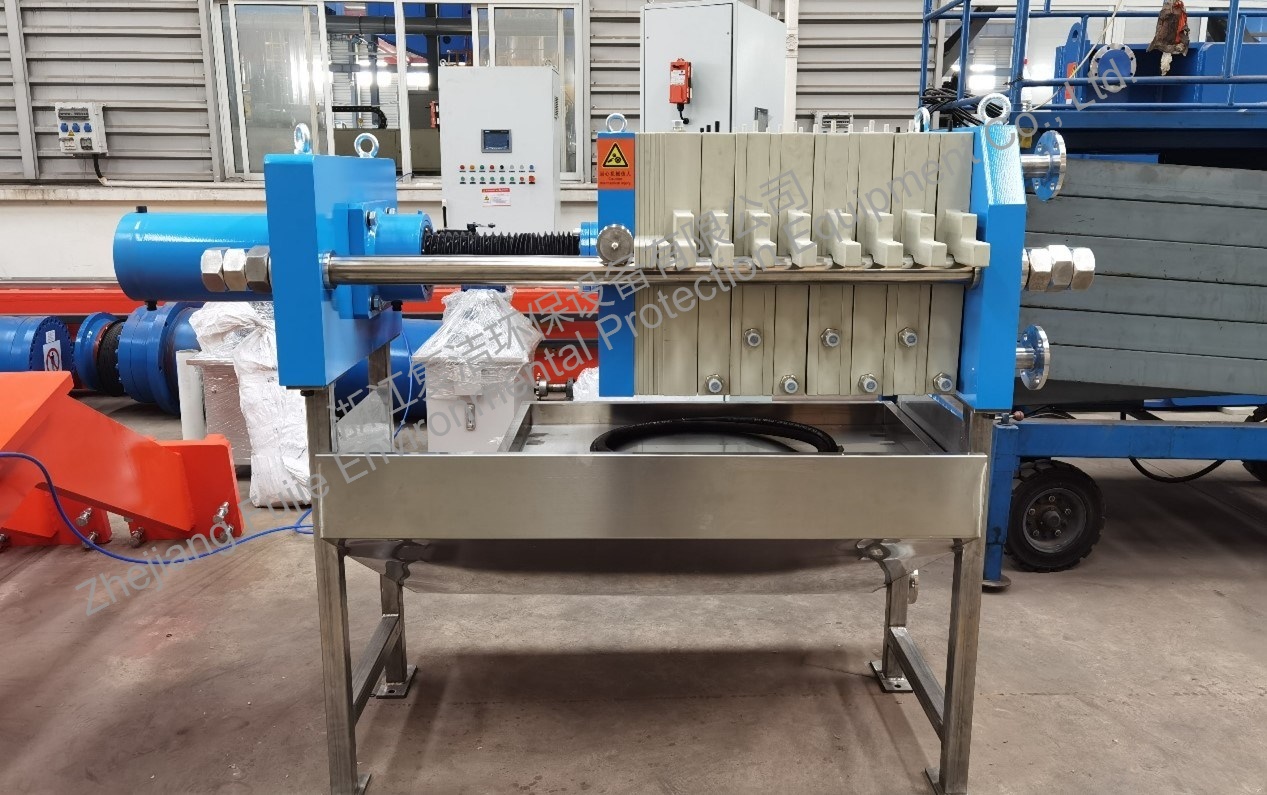
You must establish clear operational metrics to justify an equipment upgrade. Moving to a custom filter press requires measurable goals based on field data. Target a specific reduction in cycle time, such as cutting a four-hour cycle down to two hours. Define the exact cake dryness percentage required for downstream processing. Set strict limits on daily operator intervention hours. Measure the current frequency of plate failures, cloth blinding incidents, and hydraulic faults. A custom solution is justified when it directly resolves these specific metric failures. Do not upgrade based on assumptions or generic industry averages. Use hard operational data from your own plant to define your success criteria.
Chemical processing often involves extreme temperatures that destroy standard plastics. Standard polypropylene plates degrade rapidly above 180 degrees Fahrenheit. You need specialized plate materials for these conditions. Cast iron or aluminum plates handle high heat effectively without warping. PVDF plates resist highly aggressive acids and solvents that would melt standard polymers. The structural skeleton also requires heavy protection. Standard industrial paint peels away in corrosive environments, exposing the steel to rapid oxidation. You must specify custom epoxy coatings, polyurethane finishes, or full stainless steel cladding. These specialized materials prevent catastrophic structural degradation and extend the lifespan of the frame.
Highly compressible solids demand elevated feed pressures to achieve adequate dewatering. Standard OEM frames are rated for standard pressures, usually maxing out around 100 to 125 psi. Pushing them to 225 psi or higher causes catastrophic frame deflection. The steel literally bends under the immense hydraulic strain. High-pressure filtration requires a heavily reinforced skeleton. Tie-rods must be thicker and machined from high-tensile steel. Hydraulic cylinders must be oversized to hold the plate pack closed against the massive internal pressure. The thrust block and tail block must be engineered with thicker steel plating. If your slurry requires high pressure to dewater effectively, a custom-reinforced frame is mandatory.
Many industrial facilities operate in tight, congested spaces. You may have limited floor space, narrow access corridors, or low ceilings. Standard machines have rigid, bulky footprints that cannot be altered. Custom engineering provides necessary spatial workarounds. You can design a press with a shorter, wider frame to fit a specific room. You can utilize overhead plate support beams to save lateral space and allow closer placement to walls. Unique structural load limits also require custom designs. If a second-story mezzanine cannot support a standard machine's concentrated weight, the frame must be engineered for wider weight distribution. Custom footprints solve complex spatial constraints without sacrificing filtration capacity.
Specific end-products require absolute purity and minimal moisture. High-purity filter cakes need complex, multi-stage wash cycles to remove dissolved impurities. Standard units cannot route wash water effectively through the compacted cake. You need custom manifold designs for thorough cake washing. Zero-liquid discharge mandates extremely dry cakes. Standard recessed chamber plates cannot achieve this alone. You must integrate membrane squeeze capabilities. Membrane plates inflate with water or air to mechanically compress the cake after the feed pump stops. This secondary squeeze forces out the remaining moisture. Strict dryness requirements always dictate custom plate technology and specialized hydraulic controls.
The frame architecture dictates how operators interact with the machine and how the structural load is distributed. Sidebar designs are common and highly effective for standard applications. The plates rest on two side rails. However, sidebars restrict lateral access to the filter cloths. Operators must reach over the heavy steel bars for maintenance and cleaning. Overhead beam designs suspend the plates from a massive top beam. This leaves the sides completely open. Open sides provide excellent access for cloth washing, inspection, and cake removal. Overhead designs also handle heavy-duty loads better. They isolate the hydraulic clamping stress from the plate shifting mechanism, reducing wear on moving parts.
Plate and cloth selection determines your baseline filtration efficiency. Custom-machined recessed chamber plates handle specific cake thicknesses, ranging from 15mm to 50mm depending on the solid's characteristics. Membrane squeeze plates provide the ultimate moisture reduction for highly compressible sludges. You must match the plate type exactly to the slurry behavior. Filter cloth selection is equally critical. You cannot use generic woven materials for complex slurries. You must select the exact weave pattern, yarn type, and air permeability. Monofilament yarns release sticky cakes easily because of their smooth surface. Multifilament yarns capture ultrafine particles but require more frequent washing. Custom cloth selection prevents blinding and ensures consistently clear filtrate.
Manual intervention slows down production and introduces human error. Advanced automation eliminates these delays. PLC-driven hydraulic systems manage feed pressure seamlessly, ramping up the pump speed exactly as the chambers fill. Automated plate shifters separate heavy plates quickly and safely, keeping operators out of the danger zone. You can integrate automatic cloth washers to clean plates with high-pressure water between cycles. This prevents blinding without requiring manual scrubbing. Automated bomb bay drip trays catch residual moisture during the wash cycle. They open automatically when the cake is ready to fall into the hopper. These automated features drastically reduce overall cycle times and allow one operator to manage multiple machines simultaneously.
Fluid dynamics play a huge role in filtration success. Standard piping often creates turbulence at the feed inlet. Turbulence leads to uneven cake formation and premature wear on the first few plates. Custom feed manifolds ensure smooth, even slurry delivery across the entire plate pack. You can design specialized filtrate manifolds to separate cloudy initial filtrate from the clear final product. Core blowdown manifolds are essential for clean, efficient cycles. They use compressed air to clear wet, unfiltered slurry from the center feed pipe before the press opens. Custom piping prevents premature wear, improves cycle efficiency, and keeps the workspace clean.
Accessories protect the equipment and the operators working around it. You must integrate essential filter press accessories into the custom build. Safety light curtains immediately halt the machine's hydraulic system if an operator steps too close during the shifting cycle. Specialized cake chutes direct the falling solids precisely into hoppers or conveyors, preventing spillage. Automated cake discharge mechanisms physically shake the plates or scrape the cloths to dislodge stubborn, sticky cakes. Splash guards protect the surrounding area from high-pressure leaks if a cloth fails. These accessories transform a basic machine into a safe, high-performance industrial system.
Mapping specific custom features to measurable outcomes is vital for project success. This ensures every engineering choice serves a distinct operational purpose. Review the following table to understand these direct correlations between custom components and field performance.
| Custom Feature | Operational Outcome | Primary Benefit |
|---|---|---|
| Overhead Beam Architecture | Unobstructed side access to plates | Reduces maintenance and cleaning time |
| Membrane Squeeze Plates | Mechanical compression of filter cake | Achieves significantly drier cakes |
| Automated Cloth Washers | High-pressure cleaning between cycles | Prevents blinding and extends cloth life |
| Core Blowdown Manifold | Evacuates wet slurry from feed pipe | Prevents wet cake spills during discharge |
| Explosion-Proof Electricals | Safe operation in volatile environments | Ensures strict regulatory compliance |
Uneven filtering issues destroy efficiency and damage equipment. Custom feed configurations resolve this directly. Precise pump sizing ensures the slurry enters the chambers at the correct velocity. If the velocity is too high, solids pack too quickly near the inlet, blinding the cloth prematurely. If it is too low, heavy solids settle at the bottom of the chamber, creating a wedge-shaped cake. Custom center-feed, corner-feed, or dual-feed designs distribute the material uniformly based on its specific gravity. Uniform distribution builds an even cake across every single plate. This prevents differential pressure and eliminates the risk of plate blowouts entirely.
Your facility will likely grow, and your equipment must grow with it. Designing a custom frame with expansion capacity is smart engineering. You can build a heavy-duty skeleton designed to hold 100 plates. However, you initially fit it with only 80 plates to meet current demand. A heavy steel backing block fills the empty space on the frame. When production increases, you simply remove the backing block, install 20 more plates, and update the PLC parameters. This future-proofs your installation. It supports phased facility growth without requiring a completely new machine or a second installation footprint.
Product recovery is critical in chemical manufacturing and mining applications. Custom membrane squeezing maximizes this recovery. It squeezes every drop of valuable filtrate from the solid matrix. Core blowdown features push residual, unfiltered slurry back into the holding tank rather than letting it fall into the waste bin. This prevents valuable raw material from dropping into the waste hopper. For wastewater applications, these features drastically reduce sludge disposal weight. Lighter, drier sludge is significantly easier to handle and transport. These custom features directly improve your material yield metrics and streamline waste handling logistics.
Safety and compliance cannot be compromised in industrial settings. Custom enclosures contain hazardous fumes completely, protecting plant personnel. Fume hoods can be integrated directly over the plate pack and tied into your facility's central ventilation system. If you process volatile solvents or operate in a dusty environment, standard electrical components are illegal and dangerous. You must specify explosion-proof (Class 1 Div 1) sensors, motors, and wiring. Custom drip trays capture highly acidic leaks before they hit the concrete floor, preventing structural damage to your building. These enhancements mitigate regulatory risk and protect your workforce from exposure.
Guessing equipment size leads to operational disaster. You must avoid sizing errors at all costs. Bench-scale slurry testing is mandatory before finalizing any equipment specifications. You must test the exact slurry produced by your facility under normal operating conditions. Do not rely on generic industry data or theoretical calculations. Pilot-scale testing confirms how the slurry behaves under continuous pressure over multiple cycles. It reveals the exact cycle time, cloth blinding rate, and cake dryness you can expect in the field. Accurate testing dictates the precise square footage of filtration area required. Never skip the testing phase when designing a custom system.
Many filter press issues arise from poor daily management. Even the best custom engineering cannot survive neglect. Operators must follow rigorous preventative maintenance routines. They must inspect filter cloths daily for tears, folds, or severe blinding. Hydraulic fluid levels and system pressures require constant monitoring. Operators must clean the sealing edges of the plates meticulously after every single discharge. Debris left on the sealing edge causes high-pressure leaks during the next cycle. These leaks act like waterjets, carving deep grooves into the polypropylene plates and destroying them. Daily vigilance protects your custom investment from premature wear and catastrophic failure.
New automation requires new skills on the plant floor. You cannot expect operators to run a highly automated custom machine using old habits. You must implement strict change management protocols. Update all Standard Operating Procedures (SOPs) immediately upon installation. Provide specialized, hands-on training for maintenance teams. They must learn how to calibrate PLC sensors and troubleshoot hydraulic faults. They need to understand the logic behind automated cloth washers and drip tray sequencing. They must know how to safely depressurize and replace membrane squeeze plates. Comprehensive training prevents operator errors that damage expensive custom components.
Your choice of vendor dictates the success of the entire project. You must partner with a specialized filter press manufacturer with a proven track record. Vet them thoroughly before signing any contracts. Look for robust in-house engineering capabilities and a deep understanding of fluid dynamics. They should operate their own slurry testing labs to validate your field data. Ask about their post-installation support infrastructure. Will they send experienced technicians for startup and commissioning? Do they stock custom replacement parts locally? A reliable manufacturer acts as a long-term engineering partner. They ensure your solid liquid separation equipment performs flawlessly for decades.
A: Lead times for custom units typically range from 16 to 24 weeks. This timeline depends heavily on the complexity of the automation required. Sourcing specialized materials, like PVDF plates or explosion-proof electrical components, can also extend manufacturing schedules. Proper facility planning is essential to accommodate these timelines.
A: Custom engineering directly resolves frequent cloth blinding by utilizing application-specific weave patterns. It fixes uneven cake formation during the fill cycle through specialized feed manifold designs. Heavily reinforced custom frames and precise hydraulic controls eliminate the risk of plate blowouts under high pressure.
A: The choice depends entirely on your operational needs. Sidebar presses are effective for standard weights and basic applications. Overhead beam presses are necessary for extremely heavy plates or cakes. They provide unobstructed side access, making maintenance, inspection, and cloth washing significantly easier for operators.
A: Generally, no. While basic items like generic filter cloths might physically fit, most components are proprietary. Custom manifolds, automated drip trays, and specific PLC automation sensors are engineered specifically for the custom build's dimensions and fluid dynamics. Retrofitting standard parts often compromises the machine's efficiency.
A: Slurries with extreme temperatures or highly acidic and alkaline pH levels require custom plate materials. High specific gravity or highly abrasive solids demand specialized wear parts. Highly compressible solids require custom high-pressure frames. If your slurry exhibits any of these traits, standard equipment will fail prematurely.
A: Membrane filter presses feature flexible plates that inflate after the initial feed cycle completes. This inflation applies a powerful secondary mechanical squeeze to the filter cake. This physical compression forces out residual moisture that standard feed pump pressure simply cannot remove, resulting in significantly drier cakes.


