
- All
- Product Name
- Product Keyword
- Product Model
- Product Summary
- Product Description
- Multi Field Search
Views: 0 Author: Site Editor Publish Time: 2026-10-13 Origin: Site


In high-volume brewing and extract production, the efficiency of liquid-solid separation at the mash stage dictates overall facility yield, cycle time, and profitability. Legacy separation methods, such as traditional lauter tuns, or improperly specified filter presses often result in severe extract loss, high spent-grain moisture, and extended processing times. Furthermore, utilizing non-compliant or thermally inadequate plates risks catastrophic equipment failure and product contamination. Optimizing this process requires a precise understanding of the filter plates used in modern mash filtration. This guide breaks down plate architectures, material compliance, sealing technologies, and performance trade-offs. We provide the technical parameters needed to help process engineers and facility managers specify the exact filtration hardware required for their operations, ensuring maximum extract recovery and strict sanitary compliance.
Defining success in brewing mash filtration requires looking at several core metrics. A highly optimized process achieves maximum extract recovery, often measured as Brewhouse Yield (BHY). It enables rapid cycle times, allowing facilities to complete 12 to 14 brews per day. An efficient system minimizes sparge water usage while keeping suspended solids in the filtrate exceptionally low. Achieving optimal wort clarity directly impacts downstream fermentation and final product stability. The hardware facilitating this separation must handle heavy physical loads while maintaining precise fluid dynamics.
Traditional lautering relies heavily on gravity and requires a specific, coarse grain crush from a roller mill to create a natural filter bed. This gravity-dependent method is inherently slow and limits the types of grains you can process. Modern filter press technology is pressure-driven. You can use a hammer-milled fine crush, exposing significantly more starch and accelerating the turnaround time. The entire efficiency of this pressure-driven system relies on the structural integrity, internal porting, and geometric design of the mash filter plates. Without properly engineered plates, the advantages of a fine crush disappear due to uneven extraction and equipment bottlenecks.
The mechanics of the mash press follow a strict sequence: filling, pre-squeezing, sparging, and final squeezing. During the filling phase, a positive displacement pump pushes the mash into the chambers until they reach capacity. A pre-squeeze lightly compacts the cake before sparge water washes the remaining sugars from the grain bed. Finally, a high-pressure squeeze removes residual moisture. Specific plate geometries and flexible diaphragms maintain uniform pressure across the cake during these phases. If pressure distribution is uneven, channeling occurs. Sparge water bypasses the grain, leaving valuable extract behind in the press.
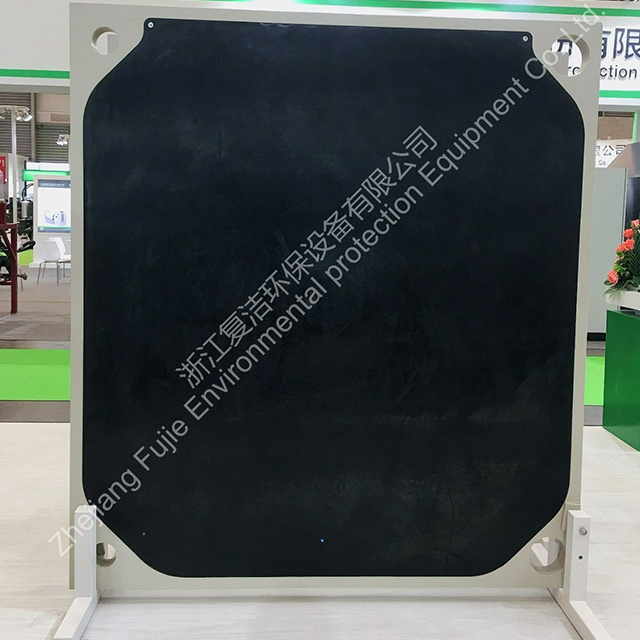
The membrane plate for mash filtration represents the current industry standard. These plates feature flexible surfaces, known as diaphragms, welded to a solid core. Once the chamber fills with mash, water or compressed air inflates these diaphragms. The inflation physically compresses the mash cake inside the chamber. This mechanical squeezing action drastically reduces the void volume within the cake, forcing out trapped liquid that would otherwise remain in the spent grain.
The direct correlation between membrane squeezing and operational efficiency is highly measurable on the production floor. Facilities utilizing membrane plates see a massive reduction in required sparge water volume. Extract efficiency routinely exceeds 98% Plato or Brix recovery. The final squeeze produces exceptionally dry spent grain. Drier grain is lighter, less prone to rapid spoilage, and much easier to transport or sell to the agricultural sector for animal feed.
Recessed chamber plates are fixed-volume plates without flexible membranes. They rely entirely on the feed pump pressure to form and dry the cake. Because they cannot physically squeeze the grain, the center of the cake often remains wet and holds residual sugars. The lack of a mechanical squeeze means sparging is less efficient. The cake density is not actively managed during the wash cycle, leading to inconsistent extraction.
Today, recessed plates are rarely used for primary mash filtration in high-yield brewing. The lower yield and wetter cakes make them inefficient for continuous operations. However, they may be evaluated for highly specific, budget-constrained, or low-volume food processing filtration tasks where mechanical squeezing is deemed unnecessary. For applications where the solid waste has no secondary value and extract recovery is not the primary economic driver, recessed plates offer a lower initial capital expenditure.
When configuring a press, engineers must choose between a mixed pack and a full membrane pack. A mixed pack alternates one membrane plate with one standard recessed companion plate. This approach saves money on initial capital expenditure since recessed plates cost less to manufacture. The trade-off is a reduction in squeeze efficiency and cake uniformity. The membrane only presses from one side of the chamber, leading to uneven washing and slightly wetter cakes compared to dual-sided compression.
A full membrane pack uses 100% membrane plates, ensuring every chamber is compressed from both sides simultaneously. This configuration maximizes cake compression and guarantees uniform washing. It is particularly beneficial when handling difficult, high-adjunct mashes containing rye, wheat, or oats. These grains tend to be sticky and resistant to fluid flow. The higher initial investment of a full membrane pack is easily justified by the continuous, daily gains in extract yield and shorter cycle times.
| Feature | Full Membrane Pack | Mixed Pack (Membrane + Recessed) | Recessed Chamber Only |
|---|---|---|---|
| Compression Dynamics | Dual-sided, uniform squeezing | Single-sided squeezing | No mechanical squeezing |
| Extract Yield (BHY) | Highest (>98% recovery) | Moderate to High | Lowest |
| Spent Grain Moisture | Very Low (Dry Cake) | Medium | High (Wet Cake) |
| Capital Investment | Highest | Moderate | Lowest |
Mash processing involves elevated temperatures that place immense stress on filtration hardware. Polymer selection dictates the lifespan of the equipment. Plates must be manufactured from high-temperature Polypropylene (PP) or specialized homopolymer blends. These materials resist deformation and thermal cycling fatigue under the constant heating and cooling inherent in batch processing. Standard polypropylene will soften, warp, or fail prematurely when repeatedly exposed to mash temperatures hovering between 75°C and 80°C.
Beyond temperature, pressure ratings dictate the structural limits of the plate. Feed pressure and squeeze pressure tolerances typically range from 6 to 15 bar. The core of the plate must withstand the differential pressure if adjacent chambers fill unevenly. The flexible diaphragms must endure thousands of inflation cycles at high pressure without suffering membrane blowout or stress fractures along the weld seams.
Any hardware integrated into a food grade filter press must carry specific certifications. Compliance with FDA 21 CFR 177.1520 and EU Regulation 10/2011 ensures the polymers used do not leach harmful chemicals into the food product under high heat and acidic conditions. Documentation and material traceability from the manufacturer are mandatory for passing facility health inspections and maintaining quality assurance standards.
Sanitary design principles dictate the physical geometry of the plates. Crevice-free designs prevent organic material from accumulating in hard-to-reach areas. Fully welded membranes are vastly superior to replaceable or bolted membranes in sanitary applications. Bolts and clamps create microscopic harborage points for bacteria. The plates must also demonstrate total compatibility with aggressive alkaline and acidic CIP regimens used to sterilize the press between production runs.
Caulked, Gasketed, Recessed (CGR) plate designs are mandatory for modern food-grade applications. CGR technology utilizes food-grade EPDM or NBR O-rings embedded in grooves around the perimeter of the plate and the feed ports. When the press closes, these gaskets compress, creating a completely drip-free operation. This prevents wort oxidation, eliminates messy leaks on the production floor, and protects the product from airborne contamination.
The method of cloth attachment heavily influences sanitary conditions. Traditional drape-over cloths hang between the plates and act as a wicking mechanism, allowing liquid to seep out of the press. In a CGR setup, the filter cloth is caulked directly into a groove on the plate face using a rubber cord. This caulked-in design prevents product bypass, keeps the sealing surfaces clean, and ensures all liquid is forced through the filtration media rather than escaping out the sides.
The internal porting of the plates dictates the fluid dynamics of the sparge water. Wash port design must ensure water flows evenly across the entire surface area of the cake. If ports are undersized or improperly located, water will channel through the path of least resistance. Channeling leaves large sections of the grain unwashed, severely depressing extract efficiency and wasting treated water.
Selecting the correct chamber depth is a delicate balance. For mash applications, cake thickness typically ranges from 30mm to 50mm. A thinner cake allows for faster filtration and easier washing but requires more plates to hold the same volume of grain. A thicker cake increases holding capacity but can slow down extraction and increase final wort turbidity if the pump cannot push liquid through the dense grain bed effectively.
Accurate capacity planning prevents bottlenecks. Calculating the total holding volume requires analyzing the grist weight, liquid-to-grain ratios, and specific gravity targets of the heaviest planned brew. The total chamber volume of the press must accommodate the fully hydrated grain bed without overpacking. Overpacking leads to excessive feed pressures, while underfilling causes uneven cakes and membrane damage during the squeeze phase.
To accurately size the press, engineers follow these capacity planning steps:
Scalability should be built into the initial capital purchase. Specifying an oversized press frame allows a facility to expand capacity later. Process engineers can install blanking plates to close off unused sections of the press initially. As production scales up, these blanking plates are removed and replaced with additional active plates. This instantly increases the volume of the press without requiring a new skeleton or hydraulic system.
Retrofitting legacy equipment often presents complex engineering challenges. Replacing plates in older presses without replacing the entire steel skeleton requires precise dimensional matching. Standard off-the-shelf plates rarely align perfectly with the piping and shifting mechanisms of a press built decades ago. In these scenarios, facilities must specify custom filter plates to ensure operational continuity.
Customization variables extend beyond basic height and width. Engineers must match external dimensions, modify feed eye locations, and engineer specific handle designs. Whether the press uses sidebar handles or overhead beam suspensions, the custom plates must integrate seamlessly with existing automatic plate shifters to prevent mechanical jamming during the cake discharge cycle.
Differential pressure is the leading cause of catastrophic plate warpage or membrane rupture. This occurs when adjacent chambers fill unevenly due to blocked ports, overly thick mash, or rapid temperature fluctuations. When one chamber is pressurized and the neighboring chamber is empty, the unsupported plate web will bend and eventually snap. Thermal shock from pumping cold water into a hot press exacerbates this structural stress.
Mitigating these risks requires strict process controls. Automated pressure monitoring systems must be installed to halt the feed pump if differential pressure exceeds safe limits. Proper feed pump sizing is equally critical. Utilizing VFD-controlled positive displacement pumps allows for a gentle, ramped filling phase. Operators must adhere strictly to the maximum squeeze pressure ratings provided by the manufacturer, ensuring air or water inflation never exceeds the structural limits of the polymer.
Blinding of filter cloths occurs when fine particulates and sticky beta-glucans clog the weave of the fabric. Bacterial buildup in plate crevices also ruins batch quality. Both issues increase differential pressure, extend cycle times, and negatively impact flavor stability. If cloths are not properly maintained, the press will eventually fail to pass liquid, halting production entirely.
Implementing rigorous CIP cycles is the primary mitigation strategy. Operators must circulate hot caustic and acid solutions at appropriate velocities to dissolve organic and inorganic fouling. Selecting the correct food-grade filter cloth involves evaluating permeability, weave pattern, and calendering. Routine inspection schedules must be established to check for membrane integrity, gasket wear, and cloth blinding.
| Operational Issue | Probable Cause | Field Mitigation Strategy |
|---|---|---|
| High Differential Pressure | Cloth blinding or uneven chamber filling | Initiate intensive CIP cycle; check feed pump VFD settings. |
| Leaking Between Plates | Worn CGR gaskets or inadequate hydraulic closure | Inspect and replace EPDM O-rings; verify hydraulic ram pressure. |
| Wet Cake Center | Insufficient squeeze pressure or short squeeze duration | Increase membrane inflation pressure within safe limits; extend squeeze timer. |
| Cloudy Filtrate (High Turbidity) | Torn filter cloth or incorrect cloth permeability | Inspect cloths for physical damage; switch to a tighter weave fabric. |
Evaluating a filter plate supplier requires looking past the sales brochure and into their manufacturing floor. Quality control begins with polymer sourcing. The supplier must use virgin, high-grade polypropylene rather than recycled blends that lack thermal stability. Molding precision, driven by advanced CNC machining capabilities, ensures the plates are perfectly flat. Warped plates will not seal, leading to dangerous high-pressure leaks. The supplier must utilize rigorous hydrostatic pressure-testing protocols to verify membrane weld strength before shipping.
Lead times and inventory management directly impact your operational risk. Custom plates take time to mold and machine. Long lead times for replacement plates can leave a facility crippled if a catastrophic failure occurs. A supplier with robust domestic or regional stocking capabilities provides a critical safety net, ensuring replacement parts are available in days rather than months.
Filtration is a dynamic process. The importance of a supplier who provides ongoing engineering support cannot be overstated. When a facility changes its mash bill, the fluid dynamics inside the press change. A competent supplier will assist with process optimization, troubleshoot differential pressure issues, and recommend alternative cloth weaves to handle sticky adjuncts.
Warranty terms reveal the manufacturer's confidence in their product. Facilities should look for clear guarantees regarding membrane lifespan, usually measured in thousands of squeeze cycles. Structural warranties against thermal deformation under stated operating conditions are also necessary. A strong warranty protects the capital investment and ensures the supplier remains accountable for the performance of their hardware.
To optimize your liquid-solid separation process and ensure equipment reliability, execute the following steps:
A: Plates used in mash applications should be rated for continuous operation at 75°C to 80°C. They must be manufactured from thermally stabilized polypropylene to prevent warping or softening during repeated heating and cooling cycles.
A: Membrane plates feature flexible diaphragms that inflate to physically squeeze the grain cake. This mechanical compression forces out trapped liquid and residual sugars that gravity or standard pump pressure alone cannot extract, pushing yields above 98%.
A: Caulked, Gasketed, Recessed (CGR) sealing uses embedded O-rings to create a completely leak-free environment. This prevents product loss, eliminates messy spills on the floor, and protects the mash from airborne contamination and oxidation.
A: While standard recessed plates cost less, they cannot physically squeeze the cake. This results in wetter spent grain, lower extract recovery, and less efficient sparging. They are generally not recommended for high-yield brewing operations.
A: Cloth lifespan depends on production volume, CIP effectiveness, and the abrasiveness of the mash. Typically, cloths in high-volume facilities are replaced every 3 to 6 months to prevent blinding and maintain optimal filtration speeds.
A: Warpage is primarily caused by differential pressure when adjacent chambers fill unevenly. Thermal shock, such as rapidly introducing cold water into a hot press, or exceeding the manufacturer's maximum squeeze pressure can also cause structural failure.


