
- All
- Product Name
- Product Keyword
- Product Model
- Product Summary
- Product Description
- Multi Field Search
Views: 0 Author: Site Editor Publish Time: 2026-05-13 Origin: Site


Legacy dewatering methods like massive settling ponds are rapidly becoming obsolete. Strict landfill moisture regulations now force industrial facilities to adopt modern filtration technologies. Stringent water recovery mandates also compel plant managers to rethink how they handle waste. You face a critical capital expenditure decision. You must evaluate whether upgrading to an Industrial pressure filter press makes strategic sense. It often competes directly against legacy belt presses, continuous centrifuges, or vacuum filters.
This technological transition goes far beyond simple waste removal. High-pressure filtration completely transforms facility operations. Specific industries leverage this machinery to slash operational expenses and eliminate bottlenecks. They recover high-value active ingredients from waste streams. They thoroughly mitigate environmental compliance risks. Let us explore how modern systems outperform legacy alternatives and why they might be the right investment for your facility.
Filter presses are engineered for scenarios requiring high solids capture and ultra-low moisture filter cakes (frequently exceeding 35% cake dryness).
They operate at roughly one-sixth the running cost of belt or rotary drum presses, often eliminating the need for expensive chemical flocculants.
Applications extend beyond waste; industries like chemical processing and power generation use them for product purification and cooling tower water recycling.
Selecting the right configuration requires evaluating slurry characteristics (optimal at 50-60% solids) against batch processing times and facility footprint.
Making a significant capital investment requires a clear financial justification. Facilities moving away from outdated dewatering methods typically see rapid returns. These returns stem directly from reduced disposal expenses and vastly improved operational efficiency.
Landfill tipping fees heavily depend on weight. Water adds massive, unnecessary weight to waste materials. Achieving a lower moisture content directly removes this excess water weight. You pay significantly less at the landfill gate. Furthermore, environmental agencies enforce strict transport regulations for wet materials. Trucks carrying sloppy, high-moisture sludge risk leaking onto public roadways. Spills trigger heavy fines and severe reputational damage. A highly compacted, dry filter cake passes the "paint filter test" easily. This ensures compliance during transit and unlocks cheaper disposal options.
You must compare daily operating costs objectively. Modern filtration systems consume significantly less energy than their alternatives. Continuous-flow centrifuges require massive electrical draw to maintain high rotational speeds. Belt presses demand constant belt washing and rely on expensive polymer flocculants to bind sludge. In contrast, pressure filtration relies primarily on a single, efficient feed pump. Maintenance teams spend less time replacing torn belts or balancing delicate centrifuge bowls.
Chart: Relative Operating Expense Comparison | |||
Equipment Type | Energy Consumption | Chemical Additive Need | Relative Daily Running Cost |
|---|---|---|---|
Filter Press | Low (Intermittent pump operation) | Minimal to None | Base (1x) |
Belt Press | Medium (Continuous drive & wash) | Very High (Polymers required) | Approx. 6x |
Centrifuge | Very High (Continuous rotation) | Moderate | Approx. 8x |
Implementing closed-loop filtration radically changes your facility footprint. Legacy plants often rely on massive settling ponds to separate solids over months. These ponds consume acres of valuable real estate. They also trigger lengthy, complex environmental permitting processes. Upgrading to enclosed mechanical filtration eliminates the need for these ponds. You free up land for profitable expansion. You also bypass severe environmental scrutiny because groundwater contamination risks drop to zero.
Modern plants rely heavily on Custom sludge processing equipment to manage uniquely complex material streams. Different sectors demand highly specialized outcomes from their filtration processes.
Mining operations generate astronomical volumes of wet slurry. Applications include tailings dewatering, coal washing, and gold extraction. Environmental watchdogs no longer tolerate massive, unstable wet tailings dams. The desired outcome here is reclaiming process water for immediate reuse. Facilities pump clean water back into dust suppression networks and cooling systems. Meanwhile, the machines create dense, stackable tailings. These dry blocks are completely safe for modern dry-stack storage methods.
Chemical plants do not just filter waste; they filter valuable products. Key applications involve separating complex emulsions and purifying liquid chemicals. Effluent treatment is a secondary benefit here. The primary outcome involves recovering high-value active ingredients. Instead of flushing expensive catalysts or specialty compounds down the drain, manufacturers trap them in the filter cake. They wash the cake, extract the value, and drastically boost their yield.
Heavy industry relies heavily on immense cooling systems. The primary application is purifying cooling tower makeup water. Airborne dust, metallic flakes, and unburned carbon constantly enter these water systems. The outcome of rigorous filtration is the complete removal of oils, greases, and abrasive particulates. Clean water prevents devastating system corrosion. It stops pipes from scaling. You avoid costly, unplanned downtime simply by keeping the cooling loop pristine.
Urban water treatment facilities face unpredictable, biological waste streams. They succeed by deploying an Industrial filtration solution wastewater treatment filter press designed specifically for high-volume sludge reduction. Municipal sludge possesses notoriously poor physical characteristics. It retains water stubbornly. The required outcome is handling this sticky material to achieve greater than 35% cake dryness. Alternative dewatering equipment routinely fails to reach this critical dryness threshold, leaving municipalities with exorbitant disposal bills.
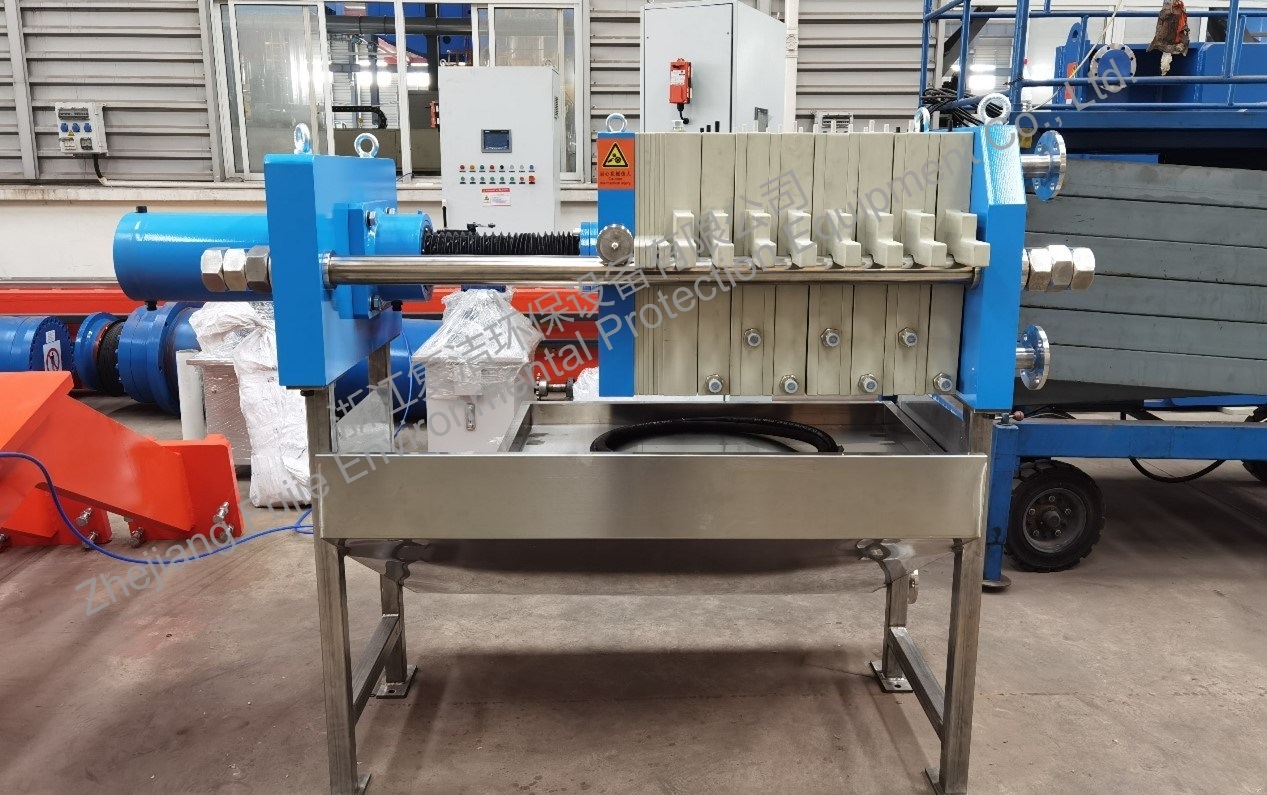
Procurement teams often misunderstand how modern filtration mechanics actually work. Clarifying these engineering realities prevents costly specification errors.
Many operators believe the machine actively crushes the mud between moving iron plates. We must clarify this myth. In standard recessed chamber designs, the plates do not physically move to squeeze the sludge. The plates clamp shut tightly to form a static, leak-proof void. The "bone-crushing pressure" comes entirely from the external feed pump pushing more material into a confined space. The equipment only applies mechanical squeezing if you specifically order membrane-style plates.
Filtration happens at a microscopic level. During the first few minutes of a cycle, fine particulates routinely pass right through the woven filter cloth. The filtrate looks cloudy. However, larger solid particles quickly bridge the tiny pores of the cloth. They build up and create a solid "cake layer" against the fabric. This layer acts as a highly efficient secondary filter barrier. The mud itself becomes the true filtration medium. Once this layer forms, the discharging liquid turns crystal clear.
Comparing technologies side-by-side reveals stark engineering contrasts. Belt presses rely entirely on gravity, mechanical rollers, and heavy chemical flocculant use. The polymer forces the sludge to bind together so the rollers can press it without pushing it through the belt weave. Conversely, filter presses rely on high-pressure confinement. They force water out through sheer hydraulic pump force. They often require absolutely zero chemical additives.
Table: Filter Press vs. Belt Press Technical Overview | ||
Technical Metric | Filter Press Technology | Belt Press Technology |
|---|---|---|
Driving Force | High-Pressure Feed Pump | Gravity & Roller Compression |
Chemical Dependency | Low to None | Mandatory (Polymer Flocculants) |
Maximum Solids Capture | Extremely High (>99%) | Moderate (90-95%) |
Cake Dryness Ceiling | Up to 70% (Material dependent) | Rarely exceeds 25% |
You must evaluate structural categorization using a Mutually Exclusive, Collectively Exhaustive (MECE) model. This structured approach simplifies the complex procurement process.
Structural & Frame Design: You choose between an overhead beam or a sidebar design. The overhead beam suspends the plates from above. This allows faster plate shifting and provides clear side access. It proves ideal for highly corrosive environments or extremely heavy mineral tailings. The sidebar design acts as the industry standard. It costs less upfront and offers excellent modular flexibility for lighter duties.
Hydraulic & Mechanical Systems: The closure mechanism matters immensely. Specifying a single hydraulic cylinder design reduces overall horsepower requirements. It uses fewer control valves than multi-cylinder setups. Fewer moving parts directly translate to improved reliability and cheaper annual maintenance.
Plate Technologies: You must select the right internal cavity style. Recessed chamber plates rely solely on feed pump pressure to drive out moisture. They are robust and simple. Membrane plates feature flexible internal bladders. After the pump stops feeding, the system inflates these bladders using compressed air or water. This applies secondary physical compression to squeeze out residual moisture, resulting in the driest possible outcome.
Advanced Automation & Safety: Manual labor slows down batch times. You should specify non-standard add-ons to streamline operations. Automatic cloth wash systems clean the fabrics between cycles, restoring permeability. Drip trays automatically catch residual water during cake discharge, keeping floors safe. Automatic plate shifters replace dangerous manual labor. Safety light curtains immediately halt machinery if an operator breaches the perimeter.
Even the best machinery fails if installed in the wrong environment. You must acknowledge operational realities before finalizing a purchase order.
Feed material characteristics dictate cycle success. The optimal working range sits between 50% and 60% solid concentration. If you pump watery slurry containing only 5% solids, the machine will take hours to build a functional cake. We advise installing a pre-treatment clarifier or thickening tank for low-solid slurries. Thickening the feed material maintains peak equipment efficiency and drastically shortens cycle times.
You must transparently address process flow limitations. Filter presses are strictly batch processes. They fill, squeeze, open, drop the cake, and close again. Facilities requiring uninterrupted, continuous flow cannot hook this machine directly to a constant effluent pipe. You must design properly sized holding tanks to accumulate slurry during the discharge phase. Alternatively, high-volume plants install dual-press systems. One machine fills while the other empties.
Do not ignore the physical installation environment. High-pressure feed pumps generate significant ambient noise levels. You may need acoustic enclosures if workers operate nearby constantly. Furthermore, vertical clearance routinely catches buyers off guard. The machine needs enough height beneath it to safely discharge massive, heavy chunks of dirt. You must calculate clearance for dumpsters, screw conveyors, or custom cake hoppers during the blueprint phase.
An industrial pressure filter press represents a highly customizable, ROI-positive capital investment for rigorous solid-liquid separation tasks.
Modern equipment practically eliminates the recurring costs of heavy polymer chemicals and extreme electrical loads associated with legacy centrifuges.
Automation upgrades like membrane squeezing and automatic plate shifting drastically reduce manual labor requirements and cycle times.
Your next steps require precise engineering data. Advise your decision-makers to start with a slurry or sludge testing pilot program. Conduct thorough bench-scale testing using your actual facility waste. This testing phase determines your exact cycle times. It proves your cloth compatibility and confirms expected cake dryness. Securing this empirical data ensures your final engineering specifications perfectly match your production needs.
A: Unlike belt presses which heavily rely on costly polymer flocculants, filter presses often achieve separation solely through high-pressure pump mechanics. The sheer mechanical force pushes water through the cloth. Though chemicals can be used for exceptionally sticky or difficult sludges, many mining and manufacturing applications operate completely chemical-free, saving massive operational costs.
A: Recessed plates form a static cavity. They rely entirely on the feed pump pushing material in to dewater the slurry. Membrane plates feature flexible internal bladders. They inflate after the initial feed cycle using compressed air or water. This applies secondary physical compression to the material, actively squeezing out residual moisture for a drier result.
A: Depending on the raw material, filter presses consistently produce solid cakes with >35% solid content. This far exceeds belt press capabilities. They often reach up to 60-70% solid content in rigorous mining or chemical applications. This ultra-dry output easily meets the strictest landfill requirements and makes material handling safe and efficient.


