
- All
- Product Name
- Product Keyword
- Product Model
- Product Summary
- Product Description
- Multi Field Search
Views: 0 Author: Site Editor Publish Time: 2026-05-27 Origin: Site


Inefficient moisture reduction drives up waste disposal costs. It wastes recoverable liquids. It also risks serious compliance failures across your entire facility. Plant managers need reliable methods to manage high-volume dewatering without breaking budgets. The solution is straightforward and highly effective. A pressure filter machine utilizes mechanical force rather than costly thermal energy. It relies on direct static pressure instead of high-maintenance centrifugal spin. This mechanical separation method offers significantly lower operational expenses for large-scale operations. You rely on robust cake filtration to extract liquid efficiently.
Understanding the precise mechanical stages matters deeply. You must know the various configuration options available on the market today. These factors are critical to accurately size the equipment for your specific daily tonnage. Correct sizing helps you forecast reliable returns on investment. We will explore the core separation mechanisms below. You will learn about modern component configurations. We will also cover essential evaluation criteria to help you avoid common sizing mistakes.
The separation process relies on "cake filtration," where the accumulating solids become the primary filtration medium.
Modern configurations (membrane vs. recessed plates) drastically alter target cake dryness and cycle times.
Evaluating a pressure filter machine requires balancing batch capacity against realistic operational cycle times, not just physical plate volume.
Avoiding common pitfalls—such as oversizing the unit or miscalculating slurry characteristics—prevents bloated CAPEX and excessive maintenance downtime.
Many operators misunderstand how a pressure filter achieves such high clarity. The secret lies in the "cake filtration" principle. Solid liquid separation occurs via cake filtration, not simple surface filtration. The filter cloth acts merely as the initial barrier. As solids accumulate against this cloth, they form a dense layer called the cake. This retained cake performs the high-efficiency depth filtration. It traps increasingly finer particles as the cycle progresses. The fluid must navigate tortuous paths through the solids, leaving contaminants behind.
To grasp the daily operation, you must understand the standard operational cycle. This sequence dictates your entire batch schedule.
Filling Phase: High-pressure feed pumps push your slurry into closed, empty chambers. The system fills rapidly to establish initial pressure.
Filtration Phase: Liquid (the filtrate) escapes through the cloth weave. Solids remain trapped inside the chamber cavities.
Cake Formation: Solids compact continuously. The sustained feed pressure packs the chamber full until fluid flow drops to a trickle.
Cake Discharge: The hydraulic system releases its massive grip. The plates open up. Gravity drops the dry cake down into hoppers or conveyors. Automation often assists this step.
When evaluating filtration fineness, you must distinguish between absolute and nominal ratings. Cloth manufacturers often state an absolute micron rating. This number indicates the physical pore size of the clean fabric. However, actual operational filtration accuracy reflects nominal fineness. Nominal fineness depends heavily on particle shape and fluid dynamics. It improves dramatically as cake builds up over the cycle. The cake itself filters far finer particles than the bare cloth ever could.
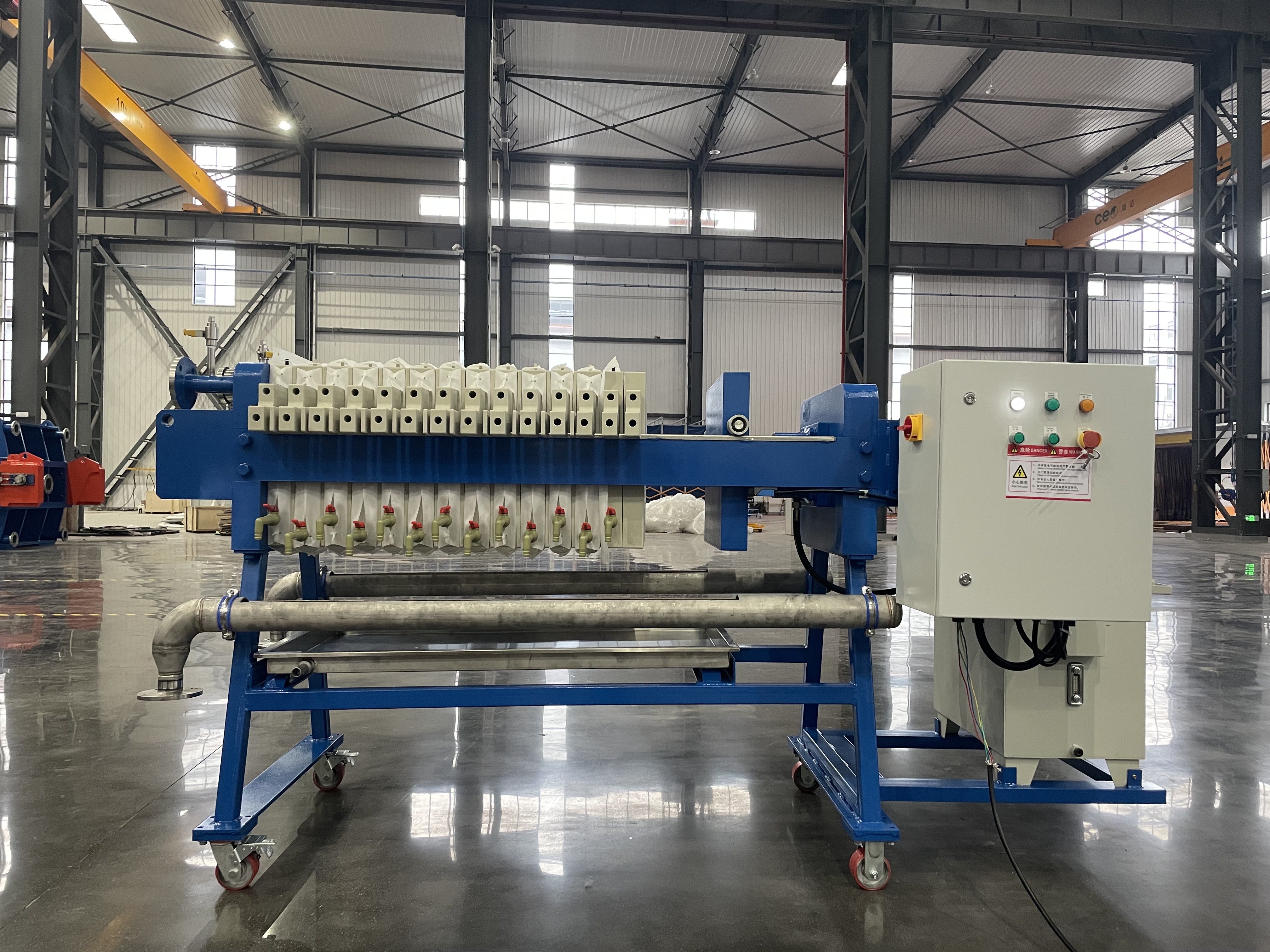
When you select Solid liquid separation industrial filtration equipment, you must navigate several structural choices. The physical skeleton dictates where you can install the unit and how operators maintain it.
Structural frameworks form the backbone of the system. You typically choose between side-bar and overhead beam designs. The traditional side-bar design is highly cost-effective. It offers a standard footprint suitable for most indoor plant environments. Operators access the plates from the sides. Conversely, overhead beam designs suspend the plates from above. They use single or dual top beams. This configuration provides completely unobstructed side access. You choose overhead designs for heavy-duty applications or highly corrosive environments where spills could damage side rails.
Plate stack technology defines your separation chambers. Recessed chamber plates represent the standard iteration. They have fixed internal volumes. You rely purely on your feed pump pressure to compact the solids. Membrane plates offer enhanced dewatering capabilities. They feature flexible internal diaphragms. These diaphragms inflate after the initial filling phase concludes. This secondary squeezing physically compresses the cake inside the chamber. It significantly reduces residual moisture.
Plate Feature | Recessed Chamber Plates | Membrane Plates |
|---|---|---|
Volume Type | Fixed cavity volume | Variable cavity volume (flexible) |
Compaction Method | Feed pump pressure only | Pump pressure + Physical inflation squeeze |
Moisture Reduction | Standard industry baseline | Extremely low residual moisture |
Cycle Time | Longer sustained feed time required | Shorter feed time, rapid squeeze finish |
Hydraulic and manifold systems control the immense forces at play. The hydraulic power pack acts as the system muscle. It maintains the massive sealing force required to prevent high-pressure leaks between plates. If the hydraulic pressure drops, the slurry will spray outward. The manifold acts as the vascular system. It manages complex external flow paths. It directs incoming feed, routes departing filtrate, and introduces wash water or compressed air at precise intervals.
Optimizing modern industrial sludge treatment requires going beyond basic pump-and-drain mechanics. Highly variable sludges demand advanced processing steps to guarantee consistent results.
Membrane squeezing is crucial for tough materials. Highly compressible sludges resist basic pump pressure. Applying secondary mechanical pressure solves this issue perfectly. The flexible plate membranes inflate using water or air. This action physically squeezes the cake. It shortens overall cycle times drastically. It also improves dry solids content, making disposal far cheaper.
Cake blowing removes even more hidden moisture. You inject compressed air directly through the formed filter cake. The air forces its way through the microscopic pores. It displaces remaining interstitial liquid trapped between solid particles. This directly impacts your final disposal volume. Transporting water is expensive. Removing it via compressed air saves trucking costs instantly.
Core washing and blowdown keep operations safe and clean. Slurry inevitably remains inside the central feed channel when the cycle ends. You must flush this core before the press opens. Core blowdown prevents wet sludge from blowing out across your dry cakes. It eliminates messy pipe blockages. It keeps the workspace hygienic and safe for operators.
Automated cloth cleaning systems protect your baseline efficiency. Sticky sludge coats the cloth fibers relentlessly. High-pressure rinse cycles serve as a mandatory feature for maintaining daily throughput. Automated spray bars wash the cloths thoroughly between cycles. This prevents severe cloth blinding. It keeps filtration rates high without requiring intensive manual labor.
Specifying wastewater treatment machinery requires precise calculations. Guesswork leads to disastrous bottlenecks or wasted capital. You must evaluate four critical criteria.
First, analyze your slurry characteristics and solids concentration. Specific gravity changes how material settles. Particle size distribution dictates fluid resistance. A slurry filled with fine clay behaves differently than one filled with coarse sand. Initial solid percentage determines your required filtration area. Low-solid slurries require massive volumes of liquid to pass through just to form a small cake.
Second, establish your target cake moisture limits. Align the desired end-state with your plate choice. Landfill compliance often requires passing paint filter tests. Incineration requires extremely dry cakes to maintain combustion temperatures. Liquid product recovery demands maximum filtrate yield. Your exact goal dictates choosing standard recessed models or high-pressure membrane models.
Third, understand cycle time versus batch capacity math. Never calculate daily capacity based solely on physical chamber volume. This mistake ruins production schedules. Actual daily throughput is governed by total cycle time. You must measure filling, filtration, squeezing, discharge, and cleaning times combined. A smaller press running fast cycles often outperforms a massive press running slow cycles.
Sizing Math Reality Check:
Press A: 100 cubic feet capacity. Cycle time: 4 hours. Daily yield (24h) = 600 cubic feet.
Press B: 60 cubic feet capacity. Cycle time: 2 hours. Daily yield (24h) = 720 cubic feet.
Conclusion: Cycle speed matters more than raw volume.
Finally, confirm material compatibility. Slurry chemicals degrade equipment quickly. Assess filter cloth materials against the chemical aggressiveness of your fluid. Polypropylene handles many aggressive environments well. Match the plate construction to your specific pH range. Temperature limits also dictate safe material choices. High-temperature slurries melt standard plastics.
Buying complex machinery introduces implementation risks. Many facilities fall into predictable traps. Recognizing these pitfalls protects your budget and your operational uptime.
The oversizing and undersizing trap catches many buyers. Overestimating your capacity needs wastes capital expenditure. You pay for steel and hydraulics you never use. Undersizing creates severe operational bottlenecks. The upstream plant must halt production while the press finishes its cycle. You must balance current data with realistic growth projections.
Misapplication of pressure destroys equipment. Many operators believe a simple myth: more pressure equals drier cake. This is completely false. Applying maximum pressure too early causes instantaneous cloth blinding. It forces fine particles deep into the clean cloth weave. The fluid path chokes completely. It also causes excessive wear on feed pumps. You need a gradual pressure ramp-up. Let the initial thin cake form gently. Then, increase the pressure to build depth.
Neglecting maintenance workflows guarantees eventual failure. Cloth degradation represents a harsh operational reality. Fibers stretch, tear, and clog. Failing to account for regular cloth washing leads to steadily declining efficiency. Solid liquid separation slows down. Cycle times drag on endlessly. You must budget time for cloth replacement and daily automated washing.
Selecting the right equipment means looking beyond the immediate purchase. You want a Pressure filter machine designed to adapt and endure.
Evaluate scalability and future-proofing early in the process. Production demands rarely stay static. They usually increase. Evaluate if the selected chassis allows for future expansion. A longer steel frame allows you to add extra filter plates later. You simply install new plates when production scales up. This prevents buying an entirely new machine just a few years down the line.
Vendor validation ensures technical promises match reality. Look for manufacturers who offer lab-scale pilot testing. Never guess how your specific slurry will behave under pressure. Send samples to the vendor's laboratory. Test it thoroughly before signing final specifications. Pilot tests ensure theoretical cycle times match real-world realities. They prove the selected cloth micron rating works perfectly. They confirm whether membrane plates are truly necessary for your material.
A pressure filter machine serves as a highly customizable, batch-process solution. It requires precise alignment with your facility’s unique throughput goals. Mechanical cake filtration provides unmatched efficiency when configured correctly.
You must balance plate types, hydraulic configurations, and advanced features like core blowdown to succeed. AVOID rushing into equipment sizing without knowing your exact cycle times. Do not fall into the trap of applying maximum pressure too fast. Protect your operation by prioritizing maintenance and automated cleaning.
Audit your current slurry data today. Calculate your exact solids percentage and daily volume requirements. Define your target moisture limits clearly. Once you gather this critical data, request lab-scale pilot tests from vendors. Real data guarantees you choose the perfect equipment for your dewatering needs.
A: A traditional plate and frame press uses alternating flat plates and hollow frames to build a cake cavity. A recessed chamber press modernizes this. It uses unified plates with built-in depressions. When two recessed plates close together, they form the cavity automatically. Recessed plates eliminate the separate frames, reducing maintenance and minimizing leak points.
A: Dryness depends entirely on your sludge characteristics and plate configuration. Standard recessed plates typically achieve 25% to 40% dry solids. If you use membrane plates for secondary squeezing, you can often reach 50% to 75% dry solids. Inorganic mineral slurries dry much faster and easier than biological wastewater sludges.
A: Cloth lifespan varies drastically based on your application. Harsh chemical exposure and abrasive slurries degrade fibers quickly. High-frequency cycles also accelerate wear. Generally, cloths last anywhere from three months to over a year. Using automated cloth washing systems and applying gradual feed pressure extends their lifespan significantly.
A: No, it relies entirely on mechanical and hydraulic force. It uses high-pressure pumps and hydraulic cylinders to separate solids from liquids. This completely mechanical approach makes it highly energy efficient. It requires a fraction of the electricity or fuel needed to run thermal dryers or high-speed centrifuges.


