
- All
- Product Name
- Product Keyword
- Product Model
- Product Summary
- Product Description
- Multi Field Search
Views: 0 Author: Site Editor Publish Time: 2026-08-19 Origin: Site


Rising sludge hauling fees and stricter landfill regulations force plant operators to evaluate their waste management processes. Facilities cannot rely on outdated separation methods. Inefficient sludge processing results in high moisture-content waste. This leads to excessive disposal volumes, high polymer consumption, and operational bottlenecks that strain plant resources. You need a reliable method to separate solids from liquids effectively.
Selecting the optimal wastewater treatment filter press requires moving beyond basic specifications. Plant managers must rigorously evaluate sludge characteristics, plate technology, and automation requirements. A well-sized system transforms liquid slurry into manageable, dry cakes. This reduces hauling weight and improves overall plant throughput. Understanding the mechanical capabilities and facility requirements ensures you implement a solution that meets strict environmental compliance standards.
A filter press operates on the principle of pressure-driven solid-liquid separation. Feed pumps push waste slurry into a series of recessed chambers. These chambers are lined with specialized, permeable filter cloths. As the slurry fills the void spaces, the feed pump continues to apply high pressure. This pressure forces the liquid portion, known as filtrate, through the microscopic pores of the filter cloth. The cloth retains the solid particles within the chamber.
The selection of the feed pump heavily influences this initial phase. Air-Operated Double Diaphragm (AODD) pumps are common for smaller installations because they naturally stall out when the press reaches its maximum pressure threshold, preventing over-pressurization. Larger installations often utilize progressive cavity pumps paired with variable frequency drives (VFDs) and pressure sensors to maintain a precise flow rate as chamber resistance increases.
Over the course of the cycle, these retained solids compact to form a dense cake. The clean filtrate passes through the cloth and travels down the drainage ports of the filter plates. Facilities either discharge this clean water directly or recirculate it back to the headworks for further processing. The cycle concludes when the filtrate flow drops to a minimal trickle, indicating the chambers are fully packed with solid material. Operators then initiate a core blowdown sequence, using compressed air to clear residual liquid from the central feed pipe before opening the press.
You must define clear performance metrics before integrating a new separation system. Target cake dryness is the primary indicator of success. Local disposal facilities often mandate specific percentage requirements for dry solids. Achieving unmatched dryness reduces the total volume of waste leaving your facility. This directly impacts your daily operational efficiency.
To establish a baseline for sludge dewatering success, operators should monitor the following parameters:
Filtrate clarity is equally critical. Poorly filtered water contains high levels of suspended solids. Recirculating dirty filtrate overloads the plant's headworks and disrupts biological treatment processes. You must also determine acceptable cycle times and daily throughput capacity. The equipment must process the daily volume of sludge generated by the plant without creating upstream bottlenecks or requiring excessive holding tank capacity.
The dewatering process does not end when the filtration cycle finishes. Efficient post-filtration cake handling prevents operational delays. Once the press opens, the compacted cakes drop from the chambers. Facilities must design a logistical workflow to manage this sudden influx of solid waste.
Common integration strategies include placing sludge carts or roll-off dumpsters directly beneath the press framework. For larger operations, automated conveyor systems offer a hands-free approach. These conveyors catch the falling cake and transport it directly to storage silos or waiting transport vehicles. Proper clearance and structural support beneath the press are necessary to accommodate these handling mechanisms. Some facilities also install cake breakers below the press to chop the large, rigid cakes into smaller, uniform pieces, which optimizes space utilization inside the disposal dumpsters.
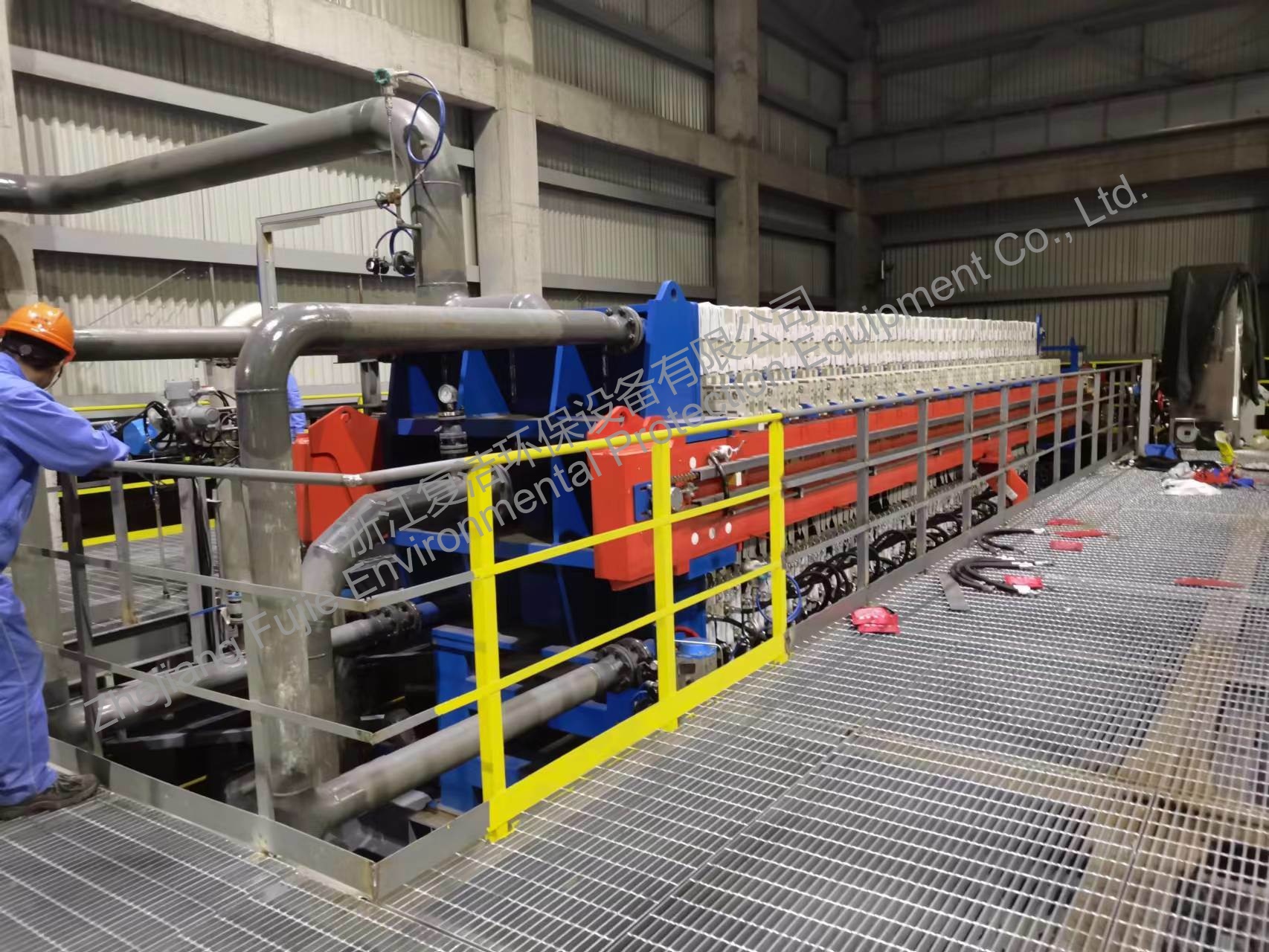
Accurate sludge characterization forms the foundation of equipment sizing. Solid concentration heavily influences cycle times. Feeding a wastewater filter press with 50–60% solids yields optimal batch times and dense cakes. Slurries with dilute concentrations, such as 5–10%, require excessive time to fill the chambers. You must utilize upstream clarifiers or gravity thickeners to concentrate dilute slurries before they reach the press.
Particle size distribution dictates filter cloth selection. Fine particles tend to blind the cloth pores, restricting filtrate flow and causing wet, sloppy cakes. In these cases, operators must use a pre-coat or body feed, such as diatomaceous earth, to maintain cloth permeability. Filter cloths come in various weaves, including monofilament and multifilament designs. Monofilament cloths with calendered finishes provide excellent cake release properties, while multifilament cloths offer superior particle retention for very fine slurries.
Chemical composition also matters. Highly corrosive slurries or extreme pH levels require specific construction materials. Polypropylene plates handle most municipal waste, but aggressive industrial sludge might require specialized manifolds made from stainless steel or CPVC. The presence of oils or greases in the sludge can rapidly degrade standard rubber gaskets, necessitating the use of specialized elastomers like Viton or EPDM.
Selecting the right plate technology determines the ultimate dryness of your cake. Recessed chamber plates represent the standard application for consistent, easily dewatered sludge. These plates rely entirely on the pressure generated by the feed pump to compact the solids. They are durable, straightforward, and highly effective for standard municipal waste streams. The standard chamber depth is typically 32mm, which provides a good balance between cake thickness and filtration time.
Membrane squeeze plates offer advanced capabilities for difficult-to-dewater sludge. These plates feature flexible membranes that expand when inflated with high-pressure water or air. After the initial feed pump cycle concludes, the secondary inflation cycle physically squeezes the cake within the chamber. This action extracts residual moisture that pump pressure alone cannot remove. Membrane plates significantly reduce cycle times and achieve higher dry solids content, making them ideal for complex biological or industrial slurries. They also allow for effective cake washing, where clean water is pumped through the formed cake to remove soluble impurities before the final squeeze.
Sizing a system requires precise calculations. Engineers determine the required chamber volume and total filtration area based on the daily sludge volume and the number of operating shifts. A plant generating 10,000 gallons of slurry per day requires a vastly different setup than one processing 100,000 gallons. You must calculate the dry solids mass to determine the exact cubic footage required per batch.
The standard sizing protocol involves the following steps:
Future-proofing your investment is a strategic necessity. Plant capacities rarely remain static. Specifying an expandable skeleton or frame allows you to add more plates later. For example, you can purchase a frame designed for 100 plates but initially install only 70. As your plant's throughput grows, you simply install the remaining plates to increase capacity without replacing the entire machine.
The level of automation you choose impacts daily operations. Manual systems require operators to physically shift each heavy plate to discharge the cake. This labor-intensive process demands dedicated personnel and increases the time between batches. Manual cleaning of the filter cloths also adds to the physical workload, often requiring operators to use handheld pressure washers to clear blinded pores.
Upgrading to an automatic filter press streamlines the entire workflow. These systems feature automated hydraulic plate shifters that move plates quickly and safely. Programmable logic controllers (PLCs) manage feed pump speeds, squeeze cycles, and air blowdowns without human intervention. Additional features like automatic cloth washing systems and bomb bay drip trays keep the workspace clean and maintain peak filtration efficiency. Automation drastically reduces the physical burden on your staff and ensures consistent cycle times regardless of operator fatigue.
Plant operators frequently compare different mechanical separation methods. A filter press typically achieves significantly higher dry solids content than a belt press. The high-pressure enclosed chambers force more water out of the sludge. Belt presses rely on tension rollers squeezing sludge between two moving belts, which limits the maximum pressure applied. If the sludge is too slippery or contains high levels of biological material, it can extrude out the sides of the belts, creating a massive mess and reducing efficiency.
Operationally, these machines differ fundamentally. A filter press operates in distinct batches, requiring time to fill, press, and discharge. A belt press operates continuously, handling a steady flow of slurry. However, belt presses require a larger footprint and consume significantly higher volumes of chemical conditioning polymers to maintain sludge stability on the moving belts. The constant need for wash water to keep the belts clean also increases the overall water consumption of the facility.
Centrifuges use rapid rotation to separate solids from liquids based on density. While effective, they draw massive amounts of electricity. The high-speed motors required to spin the bowl and scroll consume far more energy than the pneumatic or electric feed pumps used in a filter press. The sheer rotational force also creates significant noise and vibration, requiring heavy-duty vibration isolation pads and acoustic enclosures.
Maintenance complexity also sets these technologies apart. Filter presses require routine filter cloth changes and basic hydraulic fluid checks. Plant personnel can perform this maintenance on-site with standard tools. Centrifuges involve highly specialized, precision-balanced rotating assemblies. When a centrifuge scroll wears down from abrasive grit in the sludge, it requires expensive, specialized repairs that often involve shipping the unit back to the manufacturer, resulting in prolonged downtime.
| Feature | Filter Press | Belt Filter Press | Centrifuge |
|---|---|---|---|
| Operation Mode | Batch processing | Continuous flow | Continuous flow |
| Cake Dryness | Very High (up to 60%+) | Moderate (15-25%) | High (20-35%) |
| Energy Consumption | Low to Moderate | Low | Very High |
| Maintenance Complexity | Low (Cloth changes, hydraulics) | Moderate (Belt tracking, rollers) | High (Precision balancing, scroll wear) |
| Polymer Dependency | Low to Moderate | Very High | Moderate to High |
Evaluating a dewatering system requires looking at resource allocation across the equipment's lifespan. Initial equipment acquisition, shipping logistics, and site installation represent the primary upfront resource commitment. Heavier, larger frames require specialized rigging and reinforced concrete pads. The hydraulic power unit (HPU) and the associated control panels also require dedicated electrical drops and integration into the plant's main power grid.
Ongoing operational resources dictate long-term viability. You must account for the electricity used by feed pumps and hydraulic power units. The HPU only runs for a few minutes to close and clamp the press, meaning the primary energy draw comes from the feed pumps. Replacement filter cloths represent a recurring consumable requirement. Chemical conditioning, including coagulants and flocculants, is necessary to prepare the sludge for optimal separation. Finally, routine maintenance labor must be factored into the weekly operational schedule to ensure the filter press system runs at peak efficiency.
The primary value of high-pressure dewatering lies in hauling weight reduction. Water is heavy. Every gallon of water left in the sludge cake increases the tonnage billed by waste haulers and landfills. Improving cake dryness directly reduces the volume of material leaving your facility.
Consider a facility processing 10,000 pounds of dry solids per day. If the dewatering equipment produces a cake that is 20% dry solids, the total weight of the disposed material is 50,000 pounds. If a high-pressure press increases that dryness to 30%, the total weight drops to 33,333 pounds. That is a reduction of over 16,000 pounds of water per day. This reduction in volume means fewer trucks on the road, lower transportation logistics, and reduced tipping fees at the disposal site. Maximizing solid compaction ensures your facility operates efficiently and minimizes its environmental footprint regarding waste transport.
Fluctuating influent quality poses a significant risk to dewatering efficiency. Seasonal temperature changes alter biological sludge consistency. Industrial plants may experience sudden shifts in chemical composition based on production cycles. These variations drastically impact dewaterability, leading to inconsistent cake dryness and unpredictable cycle times. If the sludge becomes too thin, the press will take hours to build a proper cake, backing up the entire plant.
Implement robust equalization tanks to mitigate this risk. Equalization blends different waste streams, providing a consistent feed to the press. Automated chemical dosing controls adjust polymer and coagulant levels in real-time based on sludge density sensors. Routine sludge bench-testing allows operators to adjust feed pump pressures and cycle durations before full-scale batches run poorly. Operators should perform a Buchner funnel test or a capillary suction time (CST) test weekly to verify the sludge's readiness for filtration.
Industrial machinery inherently carries safety risks. High-pressure blowouts can occur if filter cloths fail, plates misalign, or sealing surfaces accumulate debris. Operators face exposure to hazardous chemical splashes during maintenance. Pinch-point injuries remain a serious threat during manual plate shifting or when working near automated hydraulic mechanisms.
Facilities must mandate strict safety features. OSHA-compliant light curtains instantly halt hydraulic movement if an operator breaches the safety perimeter. Splash guards contain high-pressure leaks, protecting personnel from exposure. Safety lanyards and automated fail-safes ensure the machine defaults to a secure state during power losses or mechanical faults. Proper training and strict adherence to lockout/tagout (LOTO) procedures are mandatory before any personnel reach between the plates for cleaning or inspection.
| Operational Issue | Probable Cause | Field Solution |
|---|---|---|
| Wet or Sloppy Cake | Insufficient feed time or blinded filter cloths. | Extend the feed cycle duration. Pressure wash or acid wash the filter cloths to restore permeability. |
| Cloudy Filtrate | Torn filter cloth or incorrect cloth porosity. | Inspect and replace damaged cloths. Verify the micron rating of the cloth matches the particle size. |
| Plate Blowout / Leaking | Debris on sealing surfaces or insufficient hydraulic clamping pressure. | Clean the plate mating surfaces thoroughly. Check the HPU for hydraulic fluid leaks or pressure drops. |
| Slow Fill Time | Dilute sludge feed or failing feed pump stators. | Increase upstream thickening. Inspect the feed pump for wear and replace stators or diaphragms as needed. |
Specifying an undersized system creates immediate operational bottlenecks. Poor integration with existing plant SCADA systems prevents remote monitoring and limits data collection. A lack of aftermarket support leaves facilities stranded when critical components fail, forcing the plant to bypass the dewatering stage and haul liquid sludge at an exorbitant cost.
Define strict criteria when selecting a water treatment equipment supplier. Prioritize vendors that offer comprehensive on-site pilot testing. Pilot tests prove the equipment works on your specific sludge before installation. Demand custom engineering to ensure the frame and piping fit your facility's exact footprint. Finally, require guaranteed parts availability and responsive technical support to minimize future downtime. A reliable vendor will provide a detailed piping and instrumentation diagram (P&ID) to ensure seamless integration with your existing infrastructure.
A: The optimal solids concentration for efficient operation is between 50% and 60%. Slurries with lower solids content, such as 5–10%, require excessive cycle times to form a cake. Facilities should use upstream thickening methods, like clarifiers or gravity thickeners, to concentrate dilute slurries before feeding them into the press.
A: Cycle times generally range from 1 to 4 hours. The exact duration depends heavily on the sludge's dewaterability, the feed pump pressure, the type of plate technology used, and the permeability of the filter cloth. Membrane squeeze plates typically achieve shorter cycle times than standard recessed plates.
A: Belt presses operate continuously, squeezing sludge between moving belts, which typically yields lower cake dryness. Filter presses are batch-processing systems that pump slurry into enclosed chambers under high pressure. This high-pressure environment achieves maximum solid compaction and significantly higher cake dryness, reducing disposal volumes.
A: Filter cloth lifespan varies from 3 to 12 months. The replacement frequency depends on chemical exposure, the presence of abrasive particles in the sludge, and how often the cloths undergo high-pressure washing. Regular maintenance, proper cloth selection, and routine acid washing extend their operational life.
A: Retrofitting a manual press has strict limitations. While you can add some basic automation, true automatic plate shifting and automated washing systems usually require a specifically designed frame and integrated hydraulic system. It is generally more effective and economical to specify automation during the initial purchase.
A: Routine maintenance includes daily and weekly tasks. Operators must inspect hydraulic fluid levels, check the filter cloths for blinding or tears, clean the drip trays, and verify that safety light curtains and emergency stops are fully operational. Regular lubrication of moving parts and plate shifters is also necessary.


